For a decade, the conversation about electric cars has circled the same three anxieties: range, charging time and battery longevity. How far will it go? How long am I stuck waiting? Will the battery be dead before the car is? Solid-state battery technology is the answer the industry has been promising to all three. And in 2026, after years of "five years away" jokes, it's finally moving toward production. Here's a clear-eyed look at what solid-state actually is, what it could deliver, and where the hype outruns reality.
What "solid-state" actually means
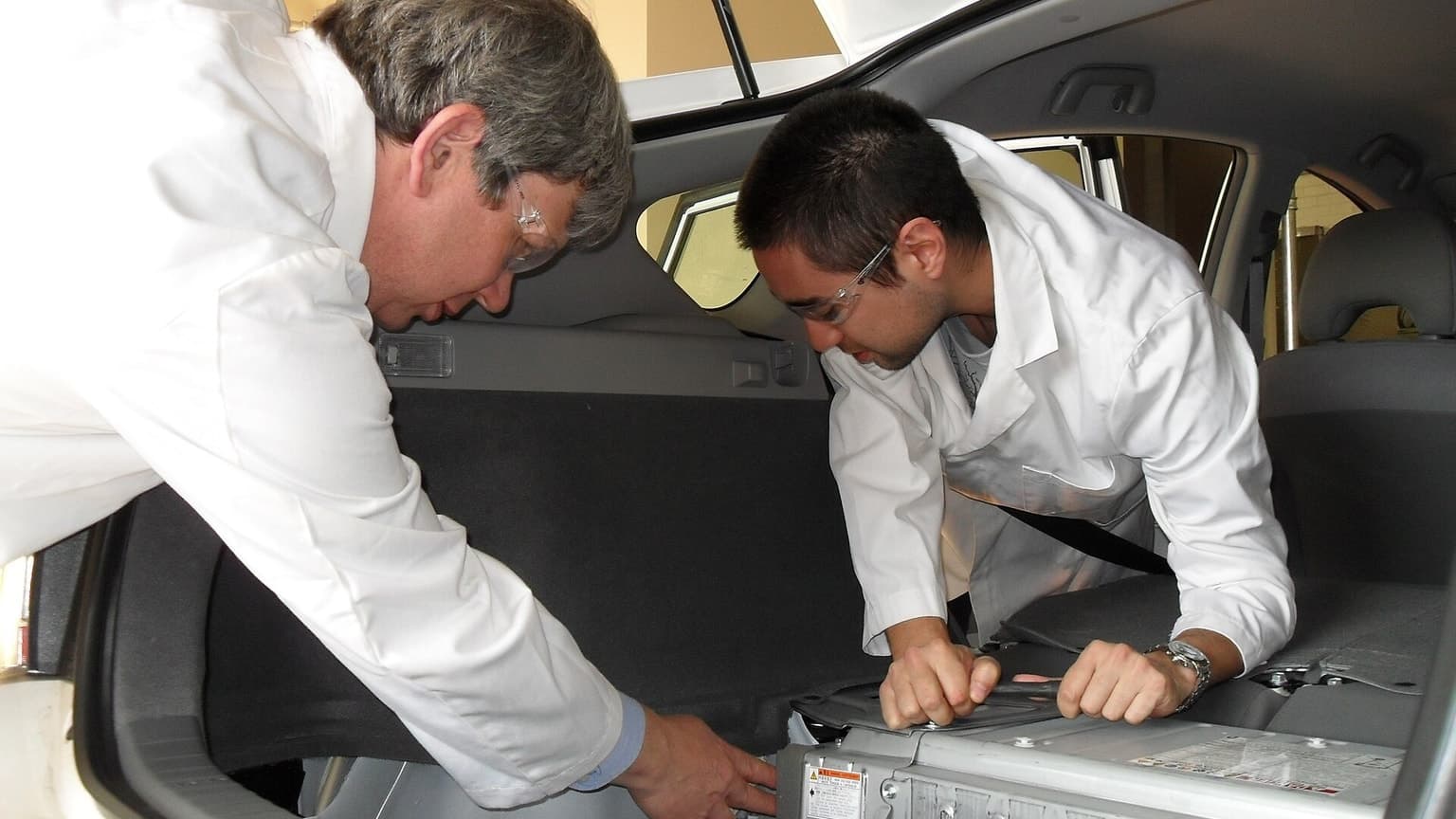
Today's EV batteries are lithium-ion cells with a liquid electrolyte, the medium ions travel through between the electrodes. That liquid is flammable, takes up space, degrades over time and limits how fast you can safely shove energy in and out. A solid-state battery replaces that liquid with a solid electrolyte.
That single swap cascades into advantages. Solid electrolytes are non-flammable, so the cells are dramatically safer and need less cooling hardware. They're denser, so you can pack more energy into the same space, meaning more range, or the same range in a smaller, lighter pack. And they tolerate faster charging and far more charge cycles before degrading. In theory, solid-state fixes nearly every weakness of the lithium-ion battery at once. That's why it's been the industry's white whale.
The numbers Toyota is claiming
The company furthest into the conversation is Toyota, which has been notably skeptical of EVs and is now betting heavily on solid-state to leapfrog the competition. Toyota has shown a solid-state prototype it says can deliver around 1,200 km (roughly 745 miles) of range and charge in under 10 minutes. Its commercial roadmap targets a first solid-state EV in the 2027–2028 window, with cells offering meaningfully more range than its current top-tier "Performance" packs and 10–80% charges in about ten minutes.
To get there, Toyota is partnering with materials and energy giants (names like Idemitsu and Sumitomo Metal Mining) to crack the hardest part of the problem, which was never the chemistry in a lab but mass production. A Toyota partner has already broken ground on a dedicated solid-state plant, a concrete sign the timeline is hardening from PowerPoint to factory floor.
Why it matters for the whole industry
If those figures hold up at scale, the implications ripple far beyond Toyota. A 700-plus-mile EV that charges in ten minutes effectively erases range anxiety. At that point an electric car is more convenient than a combustion one, because you charge at home most of the time and the rare long trip involves a coffee-length stop. The psychological barrier that's kept a chunk of buyers in petrol cars collapses.
It also reshapes design. A smaller, lighter, denser pack frees up packaging: lower floors, better proportions, less weight to haul. Some of the awkward "skateboard with a tall body" silhouettes of current EVs exist because of how much volume the battery eats. Solid-state could let designers reclaim that space, which matters enormously for a design-forward audience: better batteries mean better-looking cars, not just longer-range ones.
The catch: this is genuinely hard
Now the cold water. Solid-state has been "almost here" for years for a reason: manufacturing it reliably and affordably is brutally difficult. Solid electrolytes can crack, the interfaces between solid layers misbehave, and producing millions of flawless cells is a different universe of difficulty than producing one impressive prototype. Toyota's own language is careful: it talks about commercialization in 2027–2028, and even then likely in limited, premium applications first, not flooding every model overnight.
Cost is the other wall. Early solid-state cells will be expensive, which means they'll debut in flagship vehicles where buyers absorb the premium before economies of scale bring prices down. The mass-market, affordable solid-state EV is further out than the headline range figures imply. Treat the 745-mile, 10-minute number as the demonstrated ceiling, not the spec of the car in your driveway next year.
What 2026 actually looks like
In the meantime, the EVs arriving in 2026 are still using advanced liquid-electrolyte lithium-ion, but they're getting impressively good. New-platform cars are pushing real-world ranges past 600 miles in some configurations and 400-kilowatt-plus charging is arriving on premium architectures. Toyota itself has signaled next-gen liquid-based BEVs with cruising ranges around 620 miles before solid-state even lands. The point is that the gap between "great current battery" and "solid-state" is narrowing from both directions, which paradoxically takes some urgency off the solid-state revolution while it matures.
The takeaway
Solid-state batteries are not vaporware, and they're not magic either. They're a genuine chemistry breakthrough (swapping a flammable liquid electrolyte for a solid one to unlock more range, faster charging, longer life and better safety all at once), and Toyota's move from lab prototypes to factory groundbreaking signals the technology is finally crossing from promise to production, targeted around 2027–2028.
What they could deliver is transformative: a 700-mile, 10-minute-charging EV ends range anxiety and reshapes how electric cars look and feel. But the rollout will be gradual, expensive at first, and confined to flagships before it trickles down. The smart read for 2026: solid-state is real, it's close, and it's worth being excited about. Just keep the timeline honest. The holy grail is in sight. It isn't in the showroom yet.