There's a specific kind of person buying Japanese performance cars in 2026, and you can describe them precisely: they're in their late thirties or forties, they have disposable income for the first time in their lives, and somewhere in 2001 they spent hundreds of hours playing Gran Turismo, watching The Fast and the Furious, and tearing posters of the R34 Skyline out of tuner magazines. Now the cars from those posters are legal to import and they can finally afford them. The result is the biggest JDM boom in history.
The import clock and the R34 effect
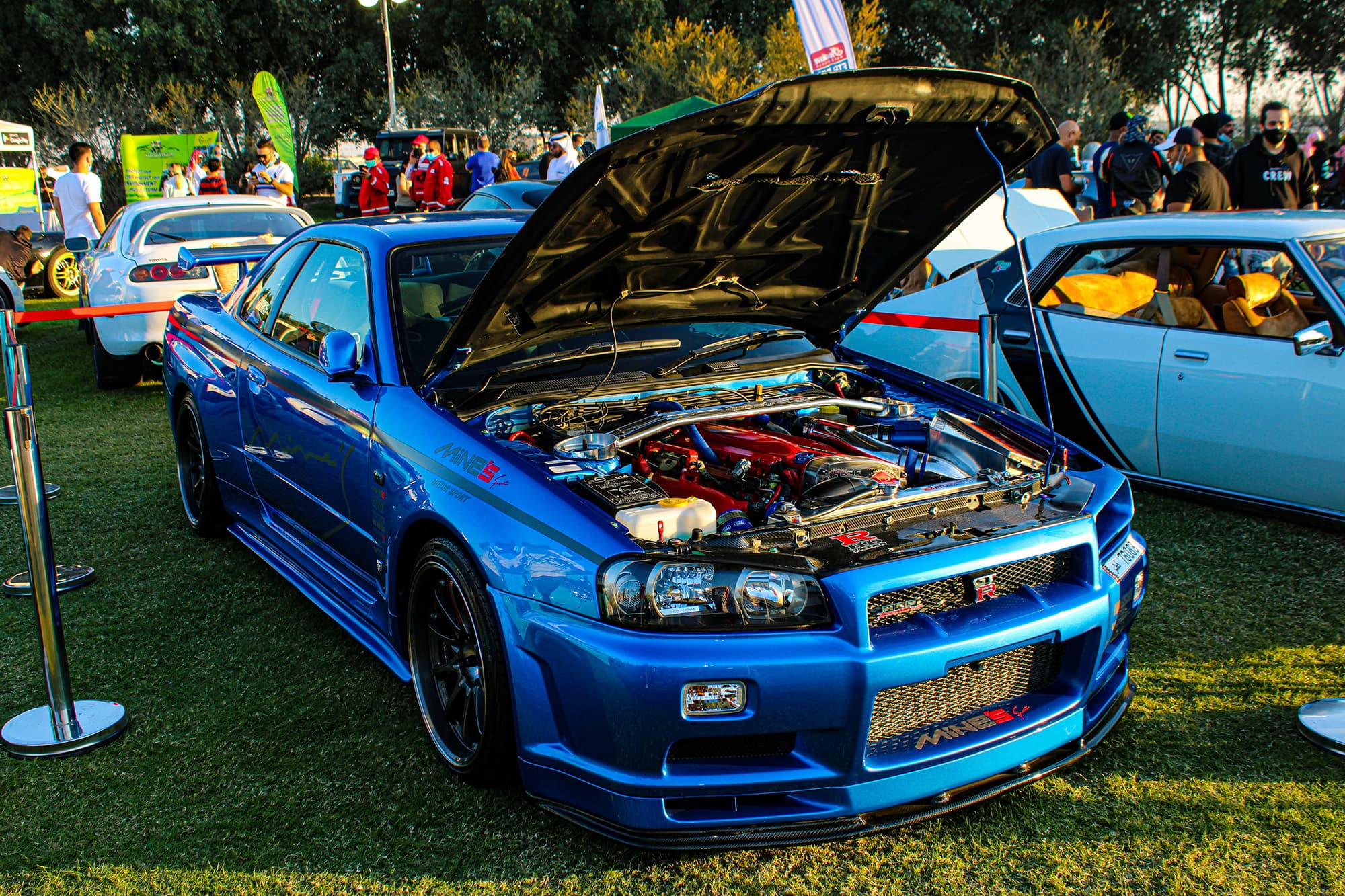
The mechanism driving the surge is regulatory. In markets like the United States, the 25-year import rule means cars become eligible only a quarter-century after build. As 2026 unfolds, the final-year R34 Nissan Skyline GT-R models (the 2001 cars, the ones with the most desirable spec) are crossing that line and becoming legal to bring in. Demand for these specific year cars has surged accordingly, because the R34 is the holy grail: the GT-R that starred in the games and films that built the entire mythology.
That single model pulls the whole market up with it. When the most-wanted car in the scene becomes attainable, attention floods into the adjacent legends (the RX-7, the Supra, the NSX, the Evo and STI), and prices follow. The R34 is the keystone; everything else is the arch it holds up.
The Supra: a thousand-horsepower legend
If the R34 is the icon of desirability, the Mk4 Toyota Supra (A80) is the icon of capability. Its 2JZ-GTE inline-six is the most mythologized engine in tuner history: a cast-iron block so over-engineered that it reliably handles 1,000-plus horsepower builds with the right turbo, fuel and management. That bulletproof reputation is why the A80 transcended being a fast car and became a platform, a canvas for the most extreme builds in the world.
That legend keeps paying dividends. The modern GR Supra revived the nameplate for a new generation, and the broader Japanese-performance renaissance (GR Yaris, Nissan Z, the whole "GR" sub-brand from Toyota) means the dream isn't just a used-car phenomenon. Manufacturers are actively feeding the appetite with new metal that wears the legendary badges.
Liberty Walk and the modern JDM look
The aesthetic has evolved too. The defining visual of "modern JDM" is the wide-body kit, and no one shaped that more than Liberty Walk, the Japanese tuner whose bolt-on overfenders, aggressive stance and flush-fitment wheels redefined what a built car should look like. The Liberty Walk treatment turned subtlety into a relic; the contemporary look is loud, wide, low and unapologetic, and it's spread from Tokyo to every car meet on earth.
This is where JDM intersects most directly with HYPE's world. The wide-body aesthetic operates exactly like a hyped sneaker or a coveted graphic tee: it's a visual signal of in-group knowledge and spend, instantly legible to anyone in the scene and meaningless to everyone outside it. A Liberty Walk kit is a flex in the purest streetwear sense.
Anime, games and the culture engine
The revival isn't running on nostalgia alone. It's being actively refueled by media. The anime MF Ghost has sparked renewed obsession with cars like the Toyota 86, bringing a high-tech, modern racing aesthetic to a younger audience and functioning as a spiritual successor to Initial D's touge-racing mythology. Gran Turismo remains a cultural force decades on. The pipeline that created the current buyers (games and anime turning kids into future owners) is still running at full tilt, manufacturing the next generation of JDM obsessives in real time.
That's why this isn't a bubble that pops when the current buyers age out. The culture self-perpetuates: every new racing game and car anime mints a fresh cohort who'll spend their adult money chasing the cars they idolized as teenagers.
Tokyo Auto Salon: the temple
The center of gravity is Tokyo Auto Salon, Japan's enormous annual tuning showcase, where recent editions have put well over 800 modified cars on display: the wildest body kits, the most extreme builds, the debut platforms for new tuner trends. It's the scene's Paris Fashion Week: where the aesthetic gets set for the year, where the brands flex, and increasingly where adjacent culture (like the BADSEKI streetwear launch timed to the 2026 show) plugs in. If you want to know where JDM is going, you watch the Salon floor.
The investment angle
There's a hard-nosed financial dimension too. A growing chorus of enthusiasts and analysts argue that clean, low-mileage JDM legends are among the smartest collectible-car investments going, appreciating faster than many European exotics, with deeper cultural demand and a still-young buyer base entering its peak earning years. The R34, the Mk4 Supra, the FD RX-7 and the NSX have all posted dramatic value climbs. For the generation that grew up on them, the dream car and the appreciating asset are now the same object.
The takeaway
The 2026 JDM boom is the rare cultural moment where nostalgia, regulation, media and money all align. The 25-year import clock is freeing the most iconic cars just as the kids who idolized them hit peak buying power. The Mk4 Supra's bulletproof 2JZ keeps it the king of extreme builds, Liberty Walk's wide-body language gives the scene a loud modern aesthetic, and a steady drip of games and anime keeps minting new believers.
It's not really about the cars, or not only. It's about a generation reclaiming the excitement of being fifteen with a controller in their hands and a poster on the wall, and finally having the means to park the real thing in the garage. The dream machines came back. So did the kids who dreamed them. In 2026, they finally met.