There was a time when esports merch meant a polyester jersey covered in sponsor logos, the kind of thing you wore to a LAN and nowhere else. That era is over. In 2026, the gear coming out of competitive gaming sits comfortably on the same shelf as the season's most-wanted streetwear, and sometimes on the same shelf as a four-figure luxury watch. The line between gaming and fashion didn't just blur. It collapsed.
The numbers behind the takeover
This isn't a vibes-based trend; it's a market. Video-game-inspired clothing was estimated at roughly $2.5 billion in 2025 and is on track toward $8 billion by 2033. That kind of growth curve is why heritage houses, sneaker giants, and luxury labels are all suddenly fluent in the language of teams, tournaments, and in-game cosmetics. Gaming is no longer a niche to cameo in. It's a channel to build in.
When heritage meets the headset
The most telling recent moves come from the top of the fashion food chain.
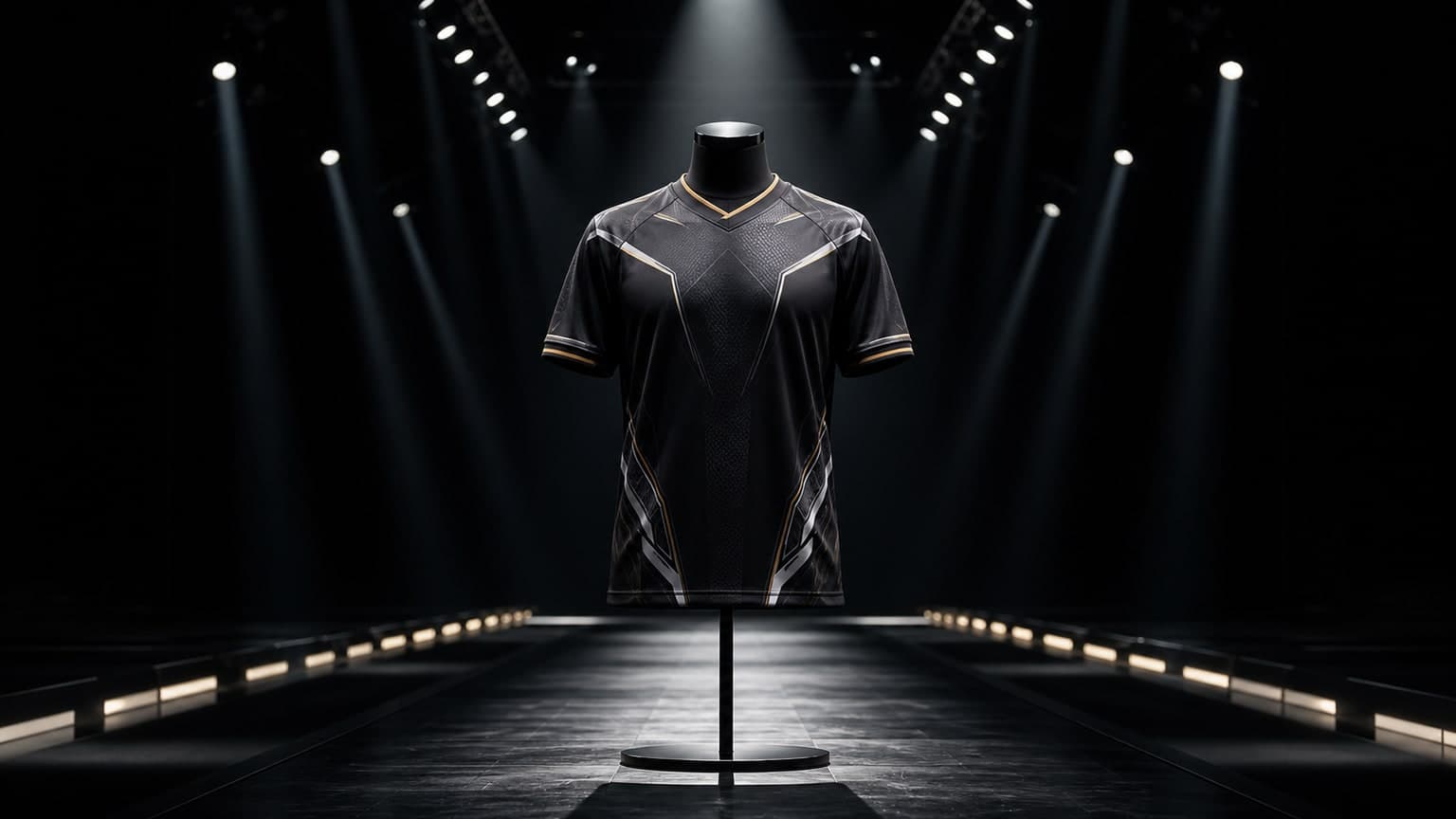
G2 Esports, one of the most culturally loud organizations in the scene, landed a multi-year deal with Adidas as its official sports apparel provider. The detail that matters: G2's 2026 collection takes an explicitly "fashion-first" approach, prioritizing design over sponsor visibility. That's a quiet revolution. For years, a jersey's job was to display logos. Now the job is to be desirable as clothing, full stop.
Then there's the luxury flex. Fnatic collaborated with Gucci on a limited-edition watch priced at $1,620, sold exclusively through Gucci's webstore. Read that again: a gaming organization and an Italian luxury house, a four-figure timepiece, no compromise on the price tag. The watch isn't merch. It's a Gucci product that happens to carry a gaming pedigree, and that's precisely the point.
Even the old-money end of menswear is in. Brooks Brothers and Rockport announced a joint deal in January 2026 with Korean org Hanwha Life Esports, supplying tailored sportswear and performance shoes. Tailoring. For an esports team. If you needed a single image to capture how far this has come, that's it.
Sneakers: the natural crossover
Footwear was always going to be the easiest bridge between gaming and fashion, because sneaker culture and gaming culture have always shared an audience and a logic: limited drops, hype cycles, community status.
PUMA's partnership with Cloud9 produced a run of sneakers including the Future Rider, RS-X, and the AGF (Active Gaming Footwear) line, shoes engineered with the gamer in mind but designed to read as lifestyle product. Adidas Originals continues as 100 Thieves' official apparel partner, regularly producing limited drops that sit squarely between gaming merch and mainstream streetwear, which is exactly where 100 Thieves has always wanted to live. The org built its brand on being a lifestyle label first and a team second, and the Adidas relationship is the proof of concept.
Balenciaga and the in-game flex
If you want the clearest signal that luxury sees gaming as a peer, look at Balenciaga's 2025 move with PUBG. It wasn't just a real-world capsule (though there was one). It included exclusive in-game cosmetics and (the detail that broke containment online) Balenciaga bomber jackets awarded to winning teams at PUBG UNITED 2025.
A luxury fashion house as the literal prize for a competitive tournament is a flex of a different order. It collapses the distinction between digital flex and physical flex entirely. The skin you wear in-game and the jacket you wear to the after-party are part of the same wardrobe now, designed by the same house, distributed across the same fandom.
Why this works (when it works)
The crossover succeeds for a reason fashion brands took years to internalize: gaming audiences are enormous, young, brand-literate, and intensely loyal. They've been buying digital fashion (skins, avatar items, cosmetics) for years. The leap to buying physical product from a label they already feel a connection to is short.
The flip side is the same warning that haunts every metaverse fashion press release: tourists get exposed. A logo slapped on a jersey with no thought to design dies on arrival. The deals that endure (G2's design-led Adidas line, PUMA's purpose-built Cloud9 footwear, 100 Thieves' patient lifestyle build with Adidas Originals) share a respect for the culture they're entering. They're not borrowing credibility. They're building it.
The bottom line
The G2s and 100 Thieves of the world figured out something the luxury houses are now racing to learn: in 2026, a gaming organization can be a fashion brand, a fashion brand can be a competitive sponsor, and a tournament prize can be a Balenciaga bomber. The categories have merged.
For the audience, it means the gear is finally good enough to wear anywhere: to the arena, to the function, to the cop line outside a sneaker drop. And for fashion, it means the most valuable runway might not have a runway at all. It has a leaderboard.