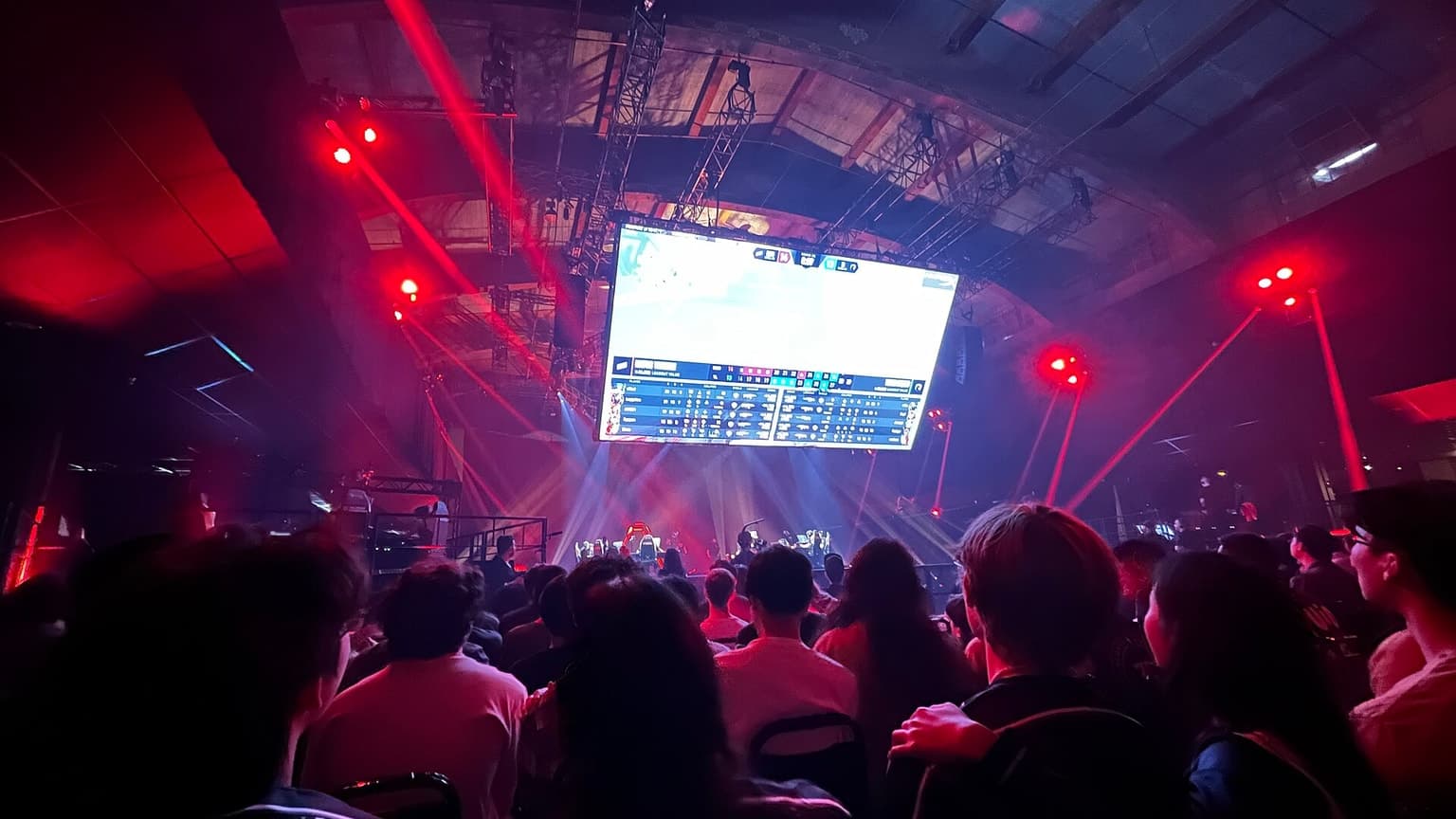
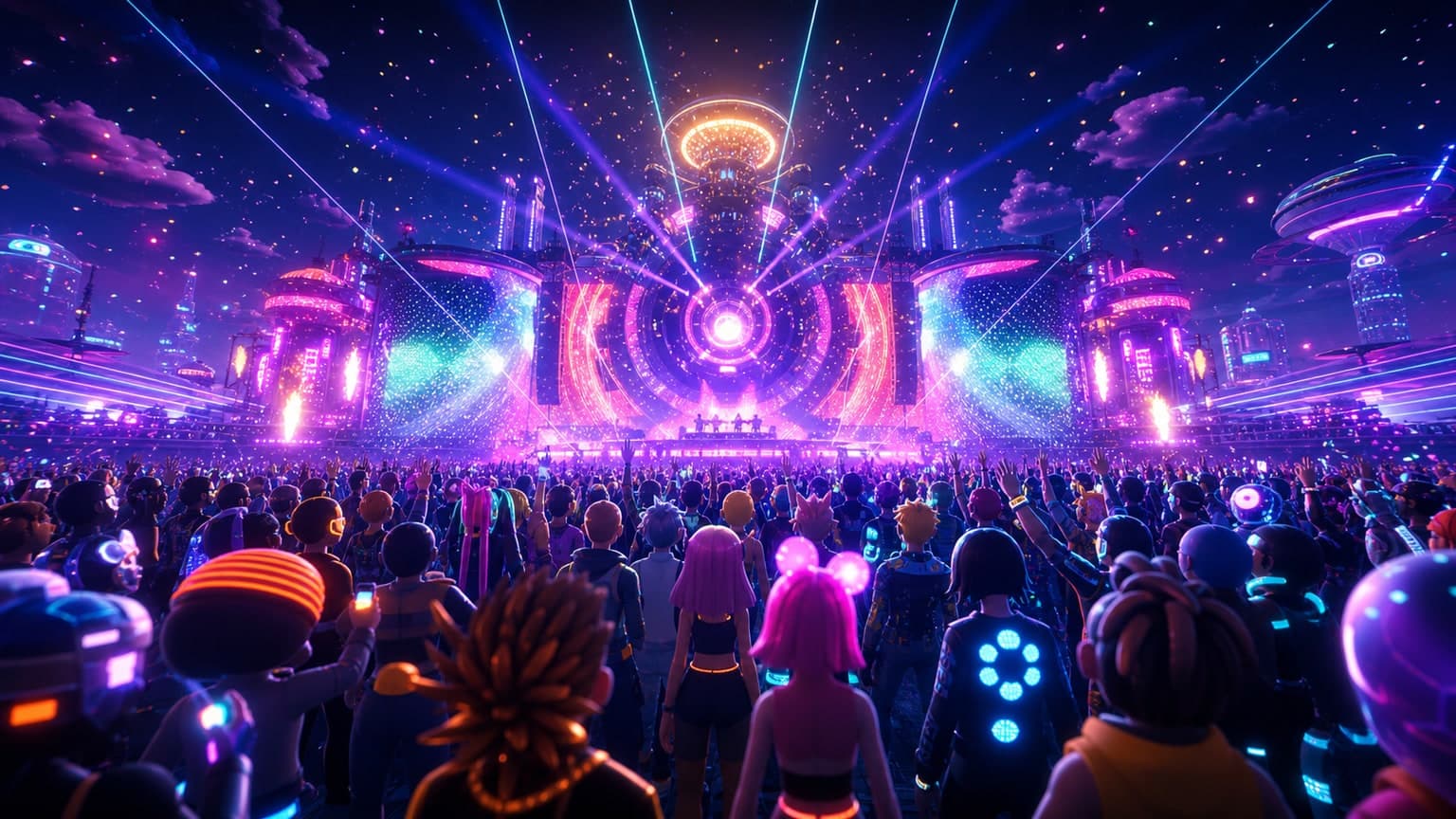
Somewhere along the way, the biggest concert venues on earth stopped being stadiums and started being servers. Fortnite counts roughly 650 million registered players. Roblox logged 16 billion hours of engagement in a single 12-month stretch from more than 380 million monthly active users. Those aren't game-audience numbers. Those are nation-state numbers, and the entertainment industry has noticed.
What used to be "kids playing video games" is now the most valuable real estate in pop culture: a place to debut songs, launch fashion, and stage the kind of spectacle no physical building can hold. Welcome to the era where the stage is a server and the merch is a QR code.
From battle royale to main stage
The pivot point was the live in-game concert, and the format has only escalated. Fortnite turned the megaconcert into a recurring institution, with Billie Eilish and Blackpink headlining a 2025 series that pulled record-breaking attendance. These aren't streamed videos bolted onto a menu. They're interactive, physics-bending events where the world itself becomes the set, players fly through the sky in formation, and the laws of a normal show simply don't apply.
Roblox approached it from a different angle: less arena spectacle, more participation. Lady Gaga's 2025 tie-in with the platform's wildly popular Dress to Impress experience tapped fan creativity directly, letting players style avatars in Gaga-inspired looks. It's a telling contrast: Fortnite throws the concert at you; Roblox makes you part of it.
The strategy behind both is the same. For an artist, a platform appearance isn't a one-off gig. It's brand expansion, fan acquisition, and a reimagining of what a release moment can even be. Why drop a single when you can drop a world?
Phygital: the digital item with a physical body
If the concert is the spectacle, the "phygital" drop is the business model, and it's the part fashion and footwear brands are racing to master. The idea is simple and slippery: a digital item that carries real-world weight, or a physical product that lives a second life online.
The receipts are piling up. Nike launched digital sneakers inside Fortnite that unlock exclusive real-world merchandise: own the virtual pair, earn the right to the physical one. Ralph Lauren's digital collection on the avatar platform Zepeto embedded QR codes that link straight to physical purchases. The avatar becomes a storefront; the closet becomes a catalog.
The numbers explain the gold rush. The video-game-inspired clothing market was pegged at roughly $2.5 billion in 2025 and is projected to balloon toward $8 billion by 2033. That's not novelty spend. That's a category being built in real time, with luxury houses, sneaker giants, and digital-native labels all staking claims.
Why this is a fashion story as much as a gaming one
The thing the old guard keeps missing is that for a huge swath of players, the avatar is the outfit that matters most. It's the look seen by the most people, worn in the most contexts, and curated with the most intention. Self-expression migrated into the game years ago. Brands are only now catching up to where their customers already are.
That's why the "metaverse fashion" conversation refuses to die even as the buzzword fades. Strip away the hype and the underlying behavior is rock-solid: hundreds of millions of people styling digital selves daily, paying real money to do it, and increasingly expecting those purchases to mean something offline too. A dress-up game like the recently launched Glam Girls reportedly drew over 100,000 paying users in beta on Roblox with essentially no marketing spend, proof that the appetite is organic, not manufactured.
The catch: depth versus drop
For all the momentum, the field is littered with cautionary tales. Plenty of brands have treated gaming platforms as a billboard: slap a logo on a skin, issue a press release, move on. Those campaigns reliably flop, because the audience can smell a tourist instantly.
The ones that work share a trait: they respect the platform's native logic. Nike's unlock mechanic rewards engagement instead of just demanding attention. Roblox's most successful fashion experiences are games, not ads with a checkout button. The lesson, repeated endlessly and ignored almost as often, is that you have to build inside the culture, not bolt onto it.
Where it goes next
The trajectory points toward deeper integration on every front. K-pop's machine has already eyed metaverse concert series, signaling that the format is maturing from one-off events into recurring touring infrastructure. Expect more phygital mechanics where the digital and physical purchase are genuinely entangled, not just cross-promoted. And expect the line between "playing a game," "going to a show," and "buying clothes" to keep dissolving until it's not really a line at all.
For the artists, brands, and platforms that figure it out, the upside is enormous: a global, always-on stage with a built-in audience the size of a continent. For everyone else, it's a reminder of where the culture actually lives now. It's not on a stadium floor. It's on a server, and it's wearing something you can't buy at the mall. Yet.