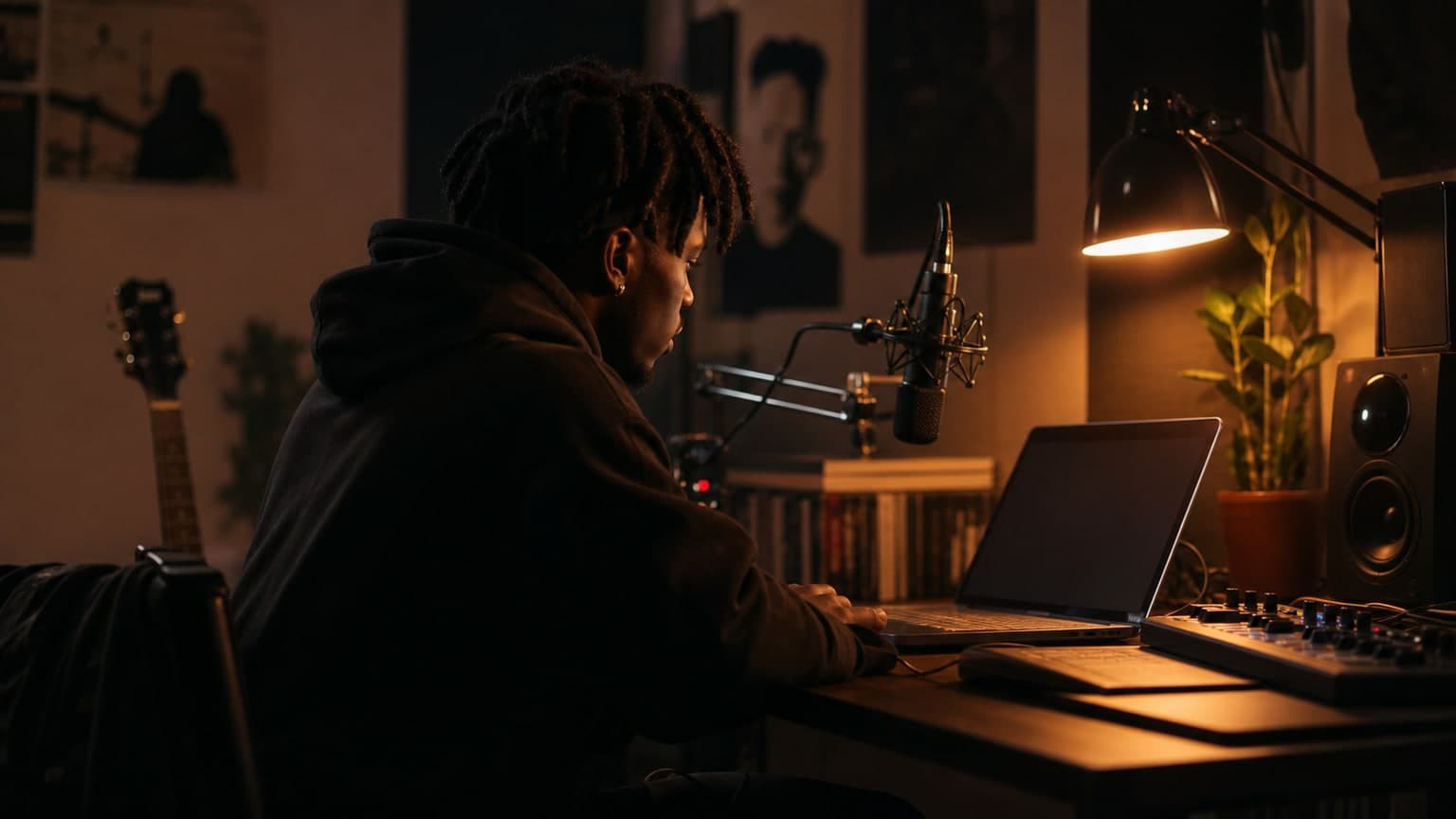
Every few years a scene appears that the gatekeepers can't ignore, usually because it was never asking for permission in the first place. In mid-2026, that scene is UK internet bedroom rap: a loose, fast-moving wave of young British artists making genre-agnostic music in their rooms and watching it ricochet around the world before any label can package it. At the front: EsDeeKid and fakemink.
fakemink and the co-sign avalanche
Start with fakemink, because the co-sign list alone tells the story. The young artist sits at the forefront of UK bedroom rap and has pulled endorsements from an almost absurd cross-section of culture: Drake, Playboi Carti, A$AP Rocky and, in the detail that breaks people's brains, Timothée Chalamet. When an Oscar-nominated actor is publicly in your corner alongside three of the most influential figures in rap, you've transcended "promising" and entered "phenomenon."
What's striking is the speed and the source. These co-signs didn't come through traditional industry channels: radio play, label development, a major-magazine cover. They came from the artists themselves, organically, because the music traveled to them through the same internet everyone else uses. That's the defining feature of this wave: it's discovered, not marketed.
EsDeeKid and the genre blur
If fakemink is the avalanche, EsDeeKid is the architect. He emerged as the 2025 breakout star of the UK underground with a hypnotic blend of ATL trap, jerk, cloud rap and drill, a sound that refuses to sit in any single lane. That blend is the whole thesis of this scene. These artists grew up with infinite, borderless access to music, and it shows: an Atlanta trap cadence over a cloud-rap haze with a drill skeleton and a jerk bounce isn't a fusion experiment to them, it's just Tuesday.
The "bedroom" framing matters here too. This isn't studio-polished, A&R-shaped product. It's intimate, lo-fi-adjacent, made cheaply and quickly, and that rawness is part of the appeal. In a year when streaming is drowning in slick, AI-generated filler, music that audibly comes from a specific kid in a specific room hits different. The texture is the authenticity.
Why the underground is the story in 2026
Zoom out and EsDeeKid and fakemink are the sharpest points of a much wider phenomenon. The UK underground has become one of the most fertile rap ecosystems on the planet, and the broader 2026 class of rising artists reflects how globalized and genre-fluid the pipeline has become. Houston's Monaleo is carving a lane on sharp lyricism and unfiltered honesty. BunnaB went from omnipresent in summer 2025 to one of rap's most exciting new faces. 18-year-old JayDon drew comparisons to Michael Jackson, Chris Brown and his mentor Usher, and was named a Billboard R&B Rookie of the Month. Belgium's Dina Ayada is reshaping flows from a hip-hop-influenced angle. Jamaica's Ayetian took dancehall by storm.
The common thread: none of these artists came up the old way. They're internet-native, scene-fluid, and increasingly international. The center of gravity in rising music has moved away from any single city's industry machine and toward a borderless web where a kid in the UK can be co-signed by a rapper in Atlanta and an actor in Hollywood within the same week.
The opportunity and the trap
For artists like EsDeeKid and fakemink, the upside is obvious: instant global reach, real co-signs, momentum that used to take years to build. The danger is just as real. Internet virality is volatile. The same algorithm that elevates a bedroom artist overnight can move on just as fast. The scene's strength (its rawness, its independence, its refusal to play the traditional game) can become a liability if it never builds the live infrastructure, the catalog, or the team to outlast a hype cycle.
The artists who convert this moment into careers will be the ones who treat the co-signs as a beginning, not a destination. A Drake or Carti nod opens a door; walking through it requires a body of work. The bedroom wave has the attention. The question is what it builds with it.
What to actually listen for
If you're coming to this scene fresh, here's the orientation. Lead with EsDeeKid to understand the sound: the genre-blurring, the hypnotic flow, the way trap, drill, cloud rap and jerk bleed into each other without friction. Then trace fakemink to understand the cultural reach, the way an artist can become an industry whisper-name through co-signs alone. From there, the wider rising class (Monaleo, BunnaB, JayDon, Dina Ayada) fills in how global and fluid the new pipeline really is.
The takeaway
EsDeeKid and fakemink aren't just two rising names. They're proof of a structural change in how music breaks in 2026: from the bedroom, through the internet, into the orbit of the biggest artists alive, without ever waiting for permission. The A-list co-signs are flattering, but they're a symptom, not the cause. The cause is a generation of British kids making borderless music too good to ignore, and an industry that, for once, is doing the chasing.