There's a certain kind of artist who doesn't dominate the discourse so much as quietly underpin it: the one whose influence you only notice when you map out who's actually shaping the sound everyone else is chasing. In 2026, that artist is PinkPantheress. She's not the loudest name on any festival poster. She might be the most important.
Everywhere that matters
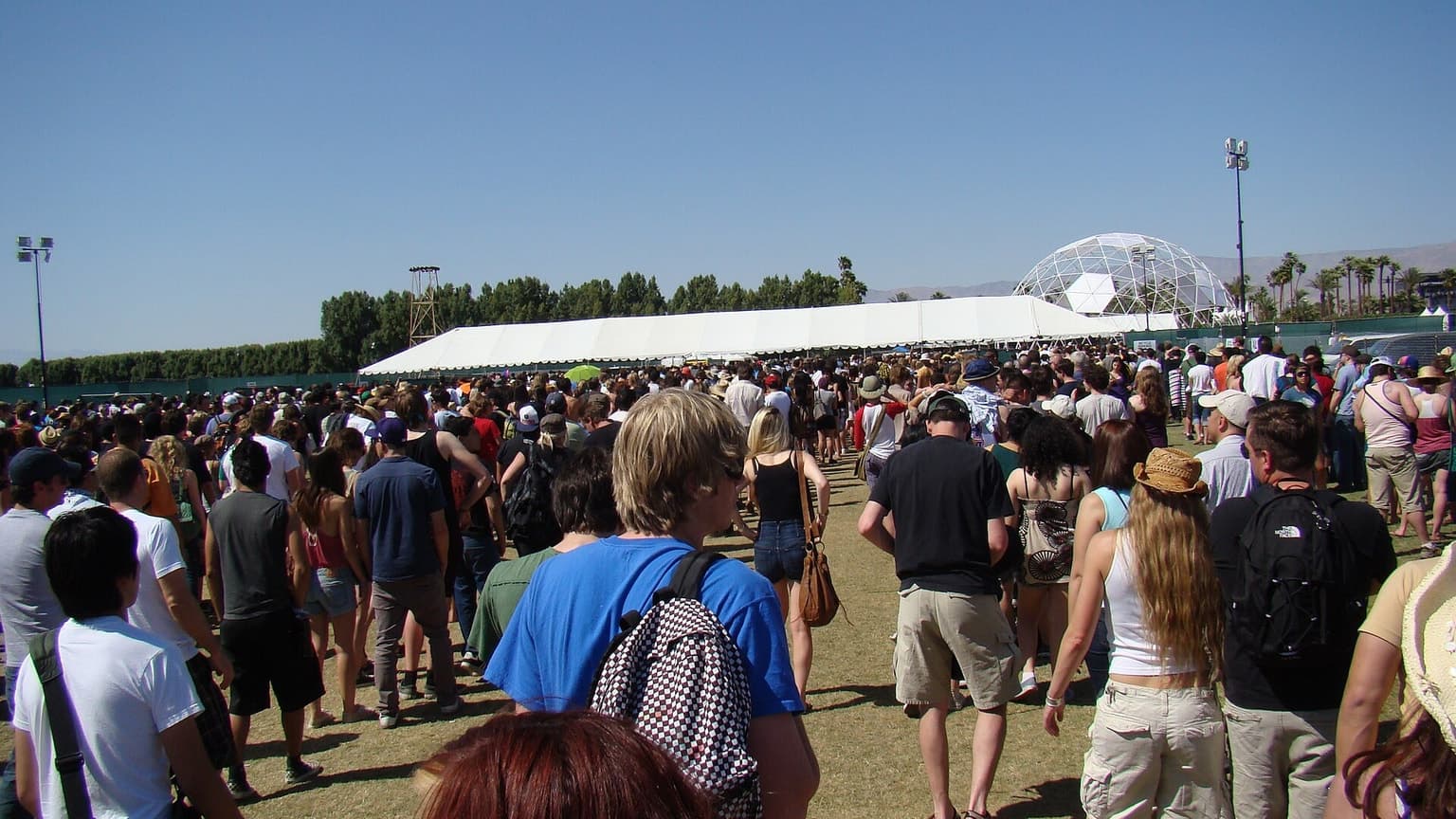
Look at the 2026 festival circuit and a pattern emerges. PinkPantheress was among the most anticipated acts at Coachella 2026, sat on the Primavera Sound bill in Barcelona alongside Doja Cat and Little Simz, and turned up as one of the recurring names across the season, the kind of artist promoters build around because she draws a crowd that crosses pop, electronic and online-native scenes at once.
That ubiquity isn't an accident of booking. It reflects a rare position: she's simultaneously a pop artist, a club artist and an internet artist, which means she fits a main-stage pop slot, a dance-tent set and a tastemaker festival all at once. Few artists in 2026 can occupy that many contexts without it feeling like a stretch. For her, it's the whole identity.
The sound she helped normalize
PinkPantheress's signature (compact songs built on UK garage, 2-step, jungle breaks and Y2K nostalgia, delivered with a soft, conversational vocal) was a niche internet aesthetic when she broke. By 2026 it's close to the center of gravity in young pop. The UK garage revival that's exploded this year, with speed garage up over 1,270% on streaming and a new generation of ravers rediscovering the genre, didn't happen in a vacuum. PinkPantheress was one of the artists who kept that DNA in the pop bloodstream long enough for the full revival to catch fire.
That's the architect's role. She didn't necessarily invent the elements, but she assembled them into a template that a generation of artists and listeners now treats as default: short, breakbeat-driven, nostalgic but forward, emotionally direct without being overwrought. You can hear her fingerprints all over the post-internet pop landscape, from hyperpop's club-ready 2.0 evolution to the micro-genres splintering off it.
Quiet by design
What makes PinkPantheress distinct in an attention economy built on spectacle is how little she trades on it. While the upper tier of music in 2026 leans into flood drops, surprise releases and maximalist rollouts, her approach is comparatively restrained: let the songs travel, let the influence accumulate, don't manufacture the moment. In a year defined by volume, that restraint reads almost like a statement.
It also fits the moment culturally. As listeners grow more skeptical of algorithmic excess and AI-generated flood (with platforms absorbing tens of thousands of synthetic tracks a day), an artist whose appeal is rooted in a specific, recognizable human sensibility has a durability that hype can't manufacture. You can't really fake what she does. The voice, the references, the editorial instinct for what to leave out: that's a point of view, and points of view are getting rarer.
The internet-native blueprint
PinkPantheress is also a case study in how an artist breaks and builds in the current era. She emerged from the internet, on her own terms, with a sound that was native to online listening before it ever needed a label's machine. That's the same blueprint now driving the broader rising class of 2026: the UK bedroom-rap wave, the genre-fluid global pipeline, the artists co-signed peer-to-peer rather than crowned by institutions.
The difference is that PinkPantheress has already cleared the hardest hurdle: turning internet momentum into a sustainable, multi-context career. Where many viral artists flame out when the algorithm moves on, she's converted attention into a festival-circuit fixture and a genuine influence on the sound of pop. That's the part the next wave should study.
Why she's the MVP
Calling PinkPantheress 2026's quiet MVP isn't about chart positions or streaming records. It's about leverage. She sits at the intersection of the year's biggest sonic story (the UK garage and high-energy dance resurgence), the year's most reliable revenue engine (the festival circuit, where she's everywhere), and the year's most valuable commodity (a distinct, un-fakeable artistic identity). Few artists touch all three.
She's also a bridge. Pop fans, club kids and online-native listeners don't always overlap, but they all show up for her. In a fractured 2026 where genre lines barely hold and audiences splinter into ever-smaller niches, an artist who can hold all of those crowds at once is doing something genuinely valuable.
The takeaway
PinkPantheress won't headline the conversation the way a flood-drop superstar does, and she doesn't seem to want to. Her influence is structural rather than spectacular: woven into the revival of an entire genre, scattered across every festival worth attending, and audible in the work of artists who may not even realize they're following her lead. In a year of noise, the quietest architect might be building the most. Pay attention to where she shows up next; the rest of pop usually ends up there a year later.