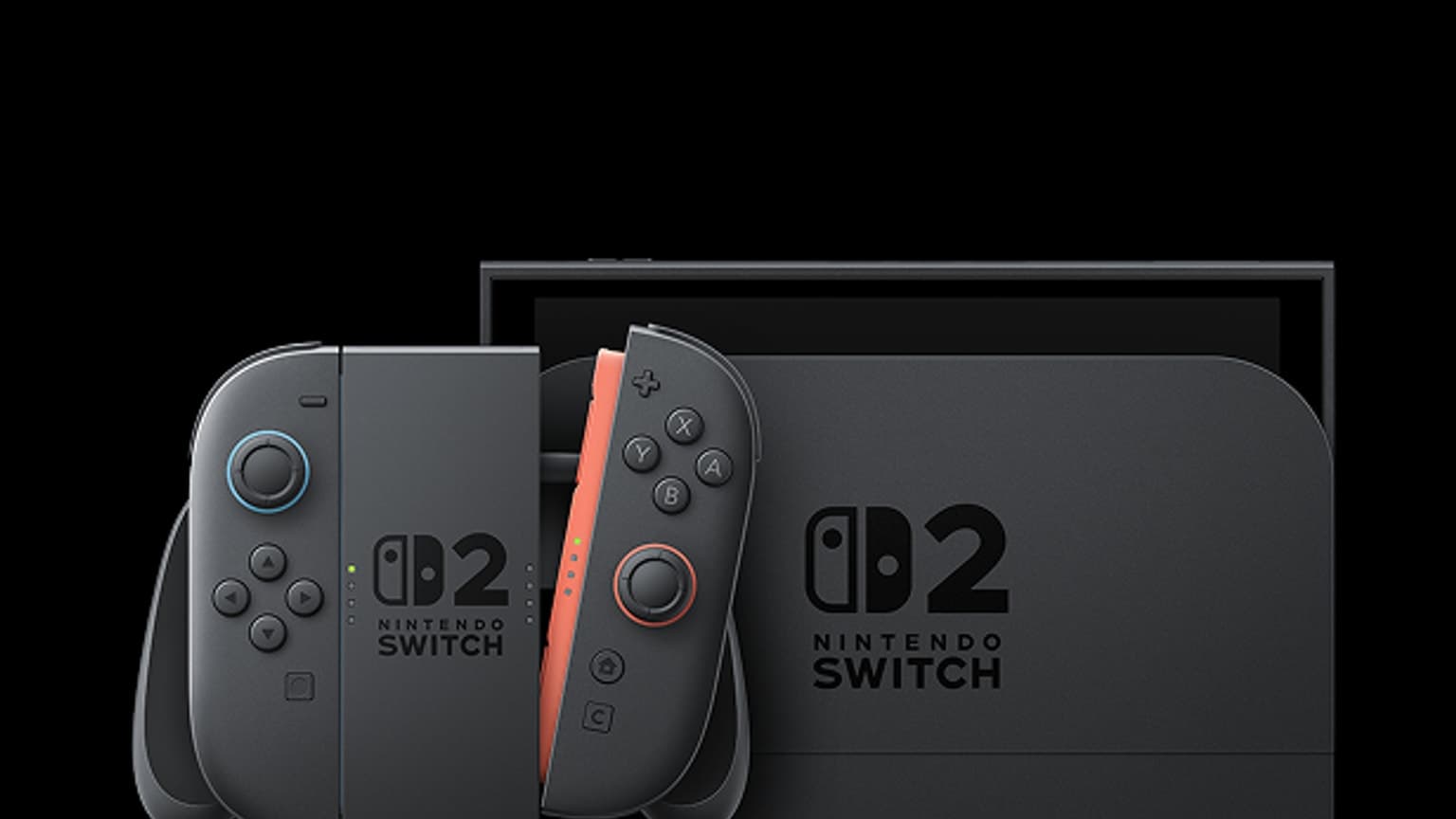
The Nintendo Switch 2 did something no Nintendo console has done before: it sold faster than any of them. Out the gate in June 2025, the system moved over 3.5 million units in its first four days, crossed 5.8 million by the end of June, and finished 2025 with more than 17 million units in players' hands. That makes it, comfortably, the fastest-selling console in Nintendo's history.
If you've been on the fence (put off by stock shortages, scalpers, or the eternal question of whether to wait for a revision), this is your guide. Here's what the Switch 2 actually delivers, what it'll cost you, and whether mid-2026 is the moment to commit.
What you're actually buying
The Switch 2 keeps the formula that made the original a phenomenon (handheld, tabletop, and docked-to-TV in one device) and meaningfully upgrades nearly every spec.
The display is a larger LCD panel (not OLED, a point worth noting for the screen snobs), and it's a capable one: 1080p Full HD at up to 120Hz in handheld and tabletop modes, scaling up to 4K at 60Hz when docked. That 120Hz handheld ceiling is the kind of spec that genuinely matters in fast games, and the docked 4K output finally lets Nintendo play in the same resolution conversation as its rivals.
Beyond the screen, you get more internal storage, updated graphics, redesigned controllers, and new social features. It's an evolution, not a reinvention, and that's exactly the point. Nintendo learned that the Switch concept was the killer feature; the job here was to make it sharper, not to reinvent it.
The killer feature: your old library comes along
Here's the detail that should close the deal for any original-Switch owner: backward compatibility. The Switch 2 plays the original Switch's library, so the eight years of games you may have already accumulated don't evaporate when you upgrade. That's a massive value argument and a sharp contrast to the clean-break console transitions of the past.
It also means the system launched with an instant catalog of thousands of titles on day one, even before its native lineup filled out. No waiting for the library to mature before there's anything to play.
What's coming that's worth the buy-in
A console lives and dies on its exclusives, and the Switch 2's pipeline is where things get genuinely exciting. The headliner is The Duskbloods: FromSoftware's new 8-player PvPvE action game, directed by Hidetaka Miyazaki, exclusive to the Switch 2 and confirmed for 2026. A Souls-studio exclusive on Nintendo hardware is the kind of prestige get that signals the platform is attracting serious third-party ambition, not just Mario and Zelda.
Add the steady drumbeat of Nintendo's own first-party machine (the franchises that have anchored every Nintendo system) plus a growing slate of third-party support, and the 2026-and-beyond lineup is the strongest argument for jumping in now rather than waiting.
The budget reality
Plan your spend honestly, because the console is just the entry fee. Beyond the system itself, you'll want to budget for:
- Storage. The internal storage is bigger than before, but modern games are large. A compatible microSD-style expansion card is close to mandatory if you download rather than buy physical.
- A second set of controllers if you play locally with friends. The social, pass-a-controller multiplayer is still one of the platform's best qualities.
- A case and screen protection if you're actually going to carry it around, which is the whole point.
- Games, obviously, which at full Nintendo pricing add up fast.
Factor all of that in and the true cost of getting set up is meaningfully higher than the sticker. None of it is surprising, but first-timers consistently underestimate it.
Should you buy now?
The case for buying in mid-2026 is strong. The launch-window stock chaos has largely settled as Nintendo scaled production to meet that record-breaking demand. The native library has had nearly a year to fill out. The blockbuster exclusives (The Duskbloods chief among them) are on the near horizon rather than the distant future. And backward compatibility means there's a mountain of games to play from minute one.
The case for waiting is thinner but not nonexistent. There's no OLED model in the lineup yet, and Nintendo's history suggests a revision (an OLED variant, a "Lite," or both) tends to arrive a couple of years into a generation. If you're the type who must have the definitive hardware and you can sit on your hands, a future revision is plausible, though entirely unconfirmed, so don't hold your breath on a specific timeline.
The verdict
For the vast majority of players, the Switch 2 is an easy recommendation in 2026. It's the rare new console that's both a clean technical upgrade and a continuation of everything that worked, it plays your existing library, and its exclusive pipeline, anchored by a genuine FromSoftware event, is heating up at exactly the right moment.
If you've been waiting for the dust to settle, it has. The fastest-selling Nintendo console ever earned the title for a reason, and there's never been a better moment to find out why for yourself.