A national team that finally feels cool
For most of its history, the United States men's national team carried a reputation problem: earnest, scrappy, occasionally lovable, rarely cool. That's over. Heading into a home World Cup in summer 2026, the USMNT has become one of the more culturally magnetic teams America fields in any sport: young, stylish, globally based, and genuinely fashionable.
Manager Mauricio Pochettino named his 26-man roster after 19 months of evaluation, headlined by Christian Pulisic alongside Tyler Adams and Weston McKennie. It's a youthful group (average age just under 27, with 13 first-time World Cup players), and youth is exactly what gives this team its cultural charge. These are players raised on European football's style culture who treat the off-pitch fit as part of the job.
Pulisic: the face of the whole thing
Every culturally relevant team needs a focal point, and the USMNT's is unambiguous. Pulisic has been the program's headliner since he was a teenager and now sits as its undisputed star, with 32 goals (fifth-most in U.S. history) across the most appearances of any active player. He plays in Italy, carries himself like a genuine international celebrity, and has become the rare American soccer player with real crossover recognition.
What makes Pulisic matter for a style audience is that he embodies the modern footballer-as-icon template that European stars have run for years: the player whose endorsements, fits and persona travel as far as his highlights. He's the proof of concept that an American soccer player can be a culture figure, not just an athlete.
The kits are the real merch grail
Here's the underrated truth of World Cup summer: the most-worn item of the entire tournament won't be a sneaker or a tee. It'll be the jersey. National team kits are the most democratic luxury object in sports. You can rep heritage, an adopted underdog, or simply the best colorway, and a great one functions as both fan declaration and fashion statement.
The USMNT kit occupies a specific cultural lane. Worn ironically by some, earnestly by others, it's become a legitimate streetwear piece: styled over baggy denim, paired with retro terrace sneakers, layered under workwear. The blokecore movement and the broader soccer-jersey-as-fashion wave turned national kits into collectibles, and a home World Cup turns the home kit into the season's defining garment. Expect limited drops to move like sneaker releases, with the rarest variations spinning up their own resale economy.
Off-pitch fits are part of the brand now
Modern national teams travel like touring acts, and the arrival fits get documented accordingly. Coordinated team travel wear, individual airport looks, tunnel arrivals: all of it now feeds the content machine that surrounds a squad. The USMNT's European-based core understands this instinctively. They've grown up in leagues where the pre-match walk is photographed like a runway and a player's personal style is part of their marketability.
It mirrors what's happened across sport: the NBA tunnel became a menswear institution, the F1 paddock became a runway, and now soccer's pre-match arrivals are joining the conversation. For a generation that consumes athletes as lifestyle figures, the fit is never just a fit. It's a chapter of the brand.
The pressure of a home stage
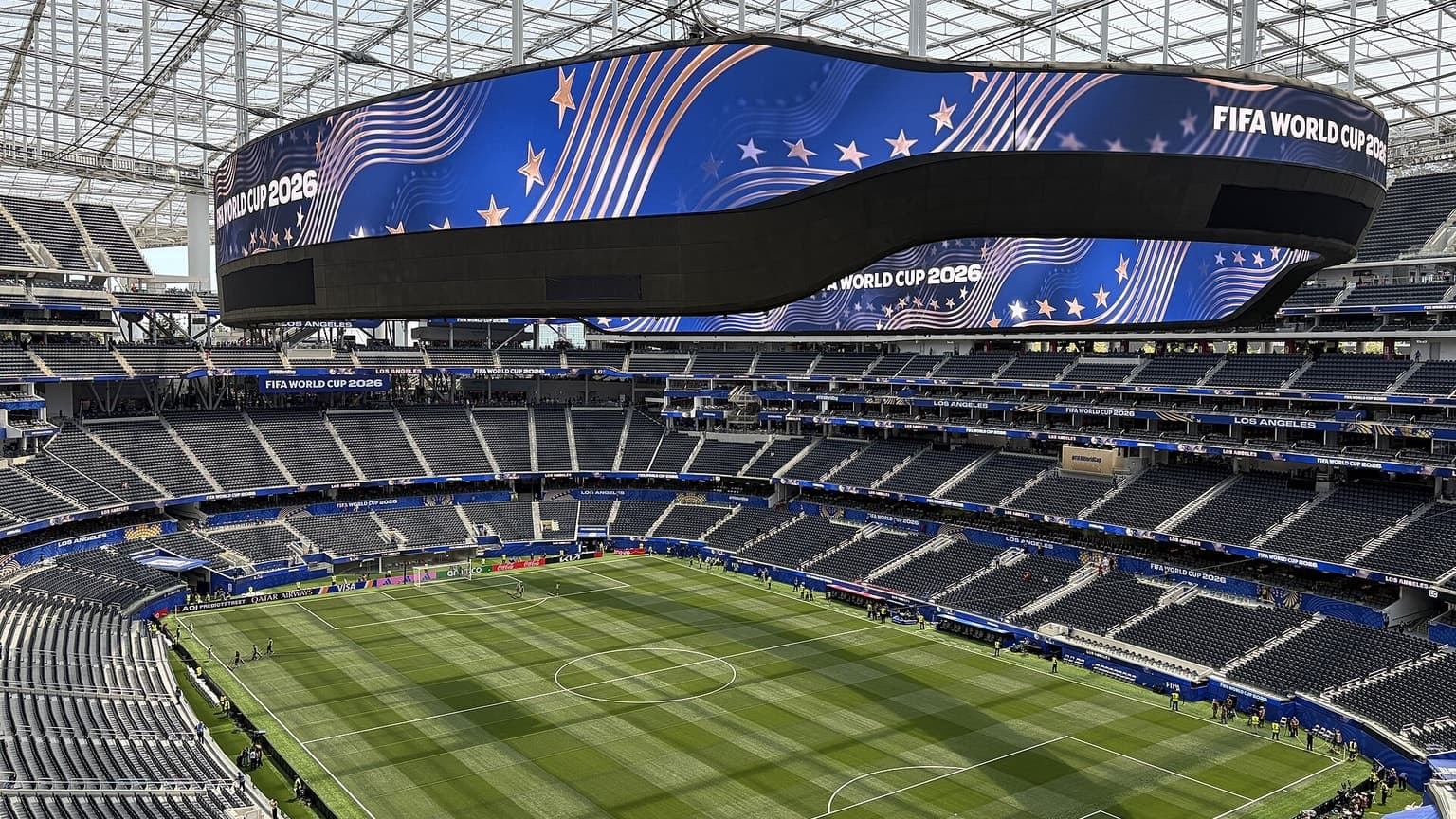
Style only carries so far without substance, and a home World Cup raises the stakes enormously. The USMNT opens at SoFi Stadium in Inglewood on June 12, a venue that's hosted Super Bowls and the biggest names in music, now repurposed as the team's launchpad. The cultural ceiling is sky-high: a deep run could convert a generation of casual American fans into lifers.
The expectations breed scrutiny. Even roster snubs became multi-day storylines, with Yunus Musah's omission sparking debate despite prior World Cup experience. That's the cost of relevance: when people care about your fits, they care about your lineup decisions too. The team has the talent and the platform. The summer will reveal whether it has the results.
Why the culture is paying attention
The USMNT's rise as a style and culture entity reflects a broader American shift toward soccer. The sport's aesthetics have thoroughly infiltrated fashion, its biggest tournament is landing on home soil, and a young, globally-savvy squad is finally giving casual fans a team that feels current rather than dutiful.
For a hype-driven audience, the appeal is layered: there's the kit as wearable culture, Pulisic as the crossover star, the off-pitch fits as content, and the home World Cup as a once-in-a-generation backdrop.
There's also a generational handoff happening in plain sight. The 13 first-time World Cup players on this roster came up in an era when American soccer already had a cultural foothold, when MLS jerseys turned up in streetwear rotations and European leagues streamed into every phone. They don't carry the old inferiority complex. They expect to be cool, expect to be watched, and dress like it. That confidence is contagious, and it's the real engine behind the team's image shift.
The USMNT used to be a team you supported out of obligation. In summer 2026, it's a team you'll want to wear.