The wearable that disappears
The smartwatch promised to put health on your wrist, and it delivered, along with a glowing screen, daily charging, and a chunk of metal you take off to sleep, which is exactly when the most valuable health data gets collected. The smart ring quietly solved all of that by doing less, in a smaller package, on a body part you forget you're wearing anything on. In 2026, the finger has won the wearable war, and the Oura Ring 5 is the clearest proof.
Oura Ring 5: smaller, smarter, and aimed at the GLP-1 era
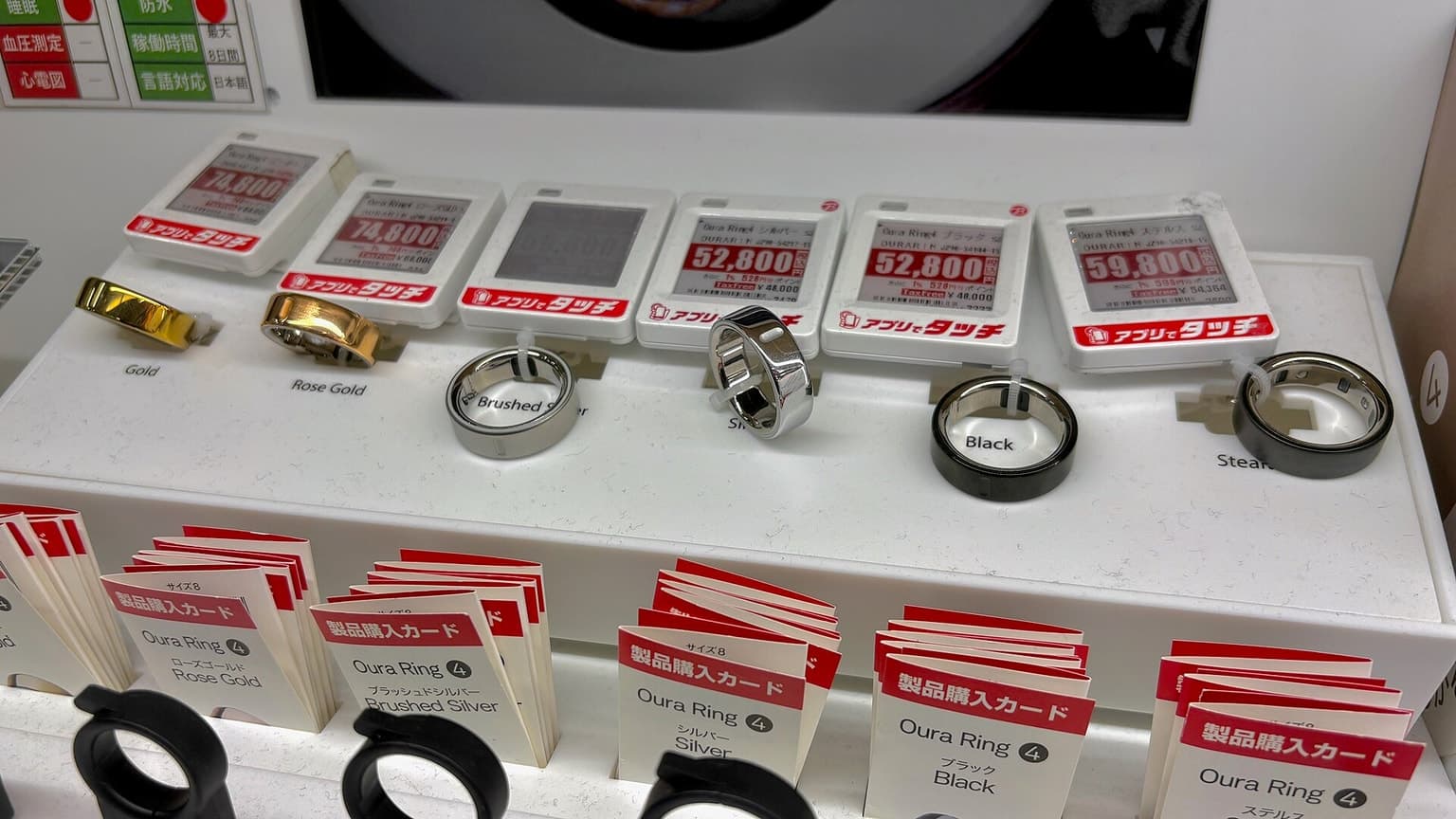
The headline number is size. The Oura Ring 5 launches as the world's smallest smart ring (roughly 40% smaller in overall volume than its predecessor) at $399, with a release window around June 2026. Slimmer design, upgraded sensors, and improved battery life of somewhere between six and nine days depending on usage make it the most wear-and-forget version yet. The whole pitch of a smart ring is that you never think about it, and Oura just made it easier to never think about it.
But the genuinely interesting upgrades are in what it tracks. Two new features tell you exactly where health tech is heading:
Blood Pressure Signals detects shifts and patterns that correlate with rising blood pressure. It's not a medical cuff replacement, but an early-warning layer that turns a recovery tracker into something closer to a daily health monitor.
GLP-1 insights is the cultural tell. The feature tracks weight and body changes specifically for members taking GLP-1 medications like Ozempic and Wegovy. With those drugs reshaping how millions of people manage weight and metabolism, Oura building a dedicated tracking layer around them is the company reading the room perfectly. Health hardware is following health behavior, and right now that behavior is GLP-1.
Why rings beat watches for this
The smart ring's advantage is structural, not incremental. Worn 24/7, including through the night, it captures the sleep and recovery data that smartwatches miss when you take them off to charge. There's no screen to distract you, no notifications buzzing your hand, no daily-driver fatigue. It's pure passive sensing (heart rate, temperature, sleep stages, readiness) collected continuously and quietly.
That makes it the ideal device for the wellness-minded who don't want another screen in their life. Oura built its reputation on best-in-class sleep and recovery tracking, and the Ring 5 doubles down on the thing rings do better than anything else: measuring you while you're not paying attention.
Samsung's ring is stuck in court
The obvious challenger should be Samsung. The Galaxy Ring made a strong Android-ecosystem play, and a Galaxy Ring 2 is the natural next move. Except it's tangled up. An ongoing patent dispute with Oura, filed back in November 2025, makes a near-term Galaxy Ring 2 unlikely, with launch slipping to late 2026 or even 2027.
That legal limbo is a gift to Oura. It hands the category leader a clear runway right as it ships its best product, and it underlines how seriously the incumbents are taking what was recently dismissed as a niche. You don't litigate over a fad. The patent fight is, in its own way, confirmation that the smart ring is real and the stakes are high.
The broader field
The market is no longer two players. Ultrahuman and a growing pack of competitors are pushing the category forward, each carving an angle: metabolic focus here, athletic recovery there, subscription-free models as a selling point elsewhere. The competition is heating up fast, which is exactly what you want as a buyer: more choice, faster iteration, and pressure on the subscription model that has been the category's most-criticized feature.
Should you buy one?
If you want continuous health insight without another screen demanding your attention, a smart ring is the most elegant option in wearables right now. The Oura Ring 5, with its smaller body, longer battery, and the new blood-pressure and GLP-1 features, is the strongest all-rounder for sleep, recovery, and everyday health awareness, especially if those are your priorities over active workout tracking, where a watch with GPS still has the edge.
Two honest caveats. First, the subscription: Oura's best insights live behind a recurring fee, so factor that into the real cost. Second, the ring is a complement to a smartwatch, not always a replacement. If you want maps, payments, music control, and notifications on your body, the ring won't do that, and it isn't trying to.
The verdict
The smart ring's whole genius is subtraction. No screen, no buzz, no nightly charge, no statement on your wrist: just quiet, continuous data from a band you forget is there. The Oura Ring 5 sharpens that proposition to its finest point yet and reads the GLP-1 moment with uncanny precision, while its biggest rival sits sidelined in court. The watch will keep its place for people who want a computer on their wrist. But for everyone who just wants to understand their body without thinking about a device, the future fits on a finger.