The neon is gone
Remember peak gorpcore? The high-vis yellow shells, the trail runners worn to dinner, the carabiner clipped to a tote like a dare, the conspicuous Arc'teryx dead-bird logo doing the talking. That was the loud era. It's over.
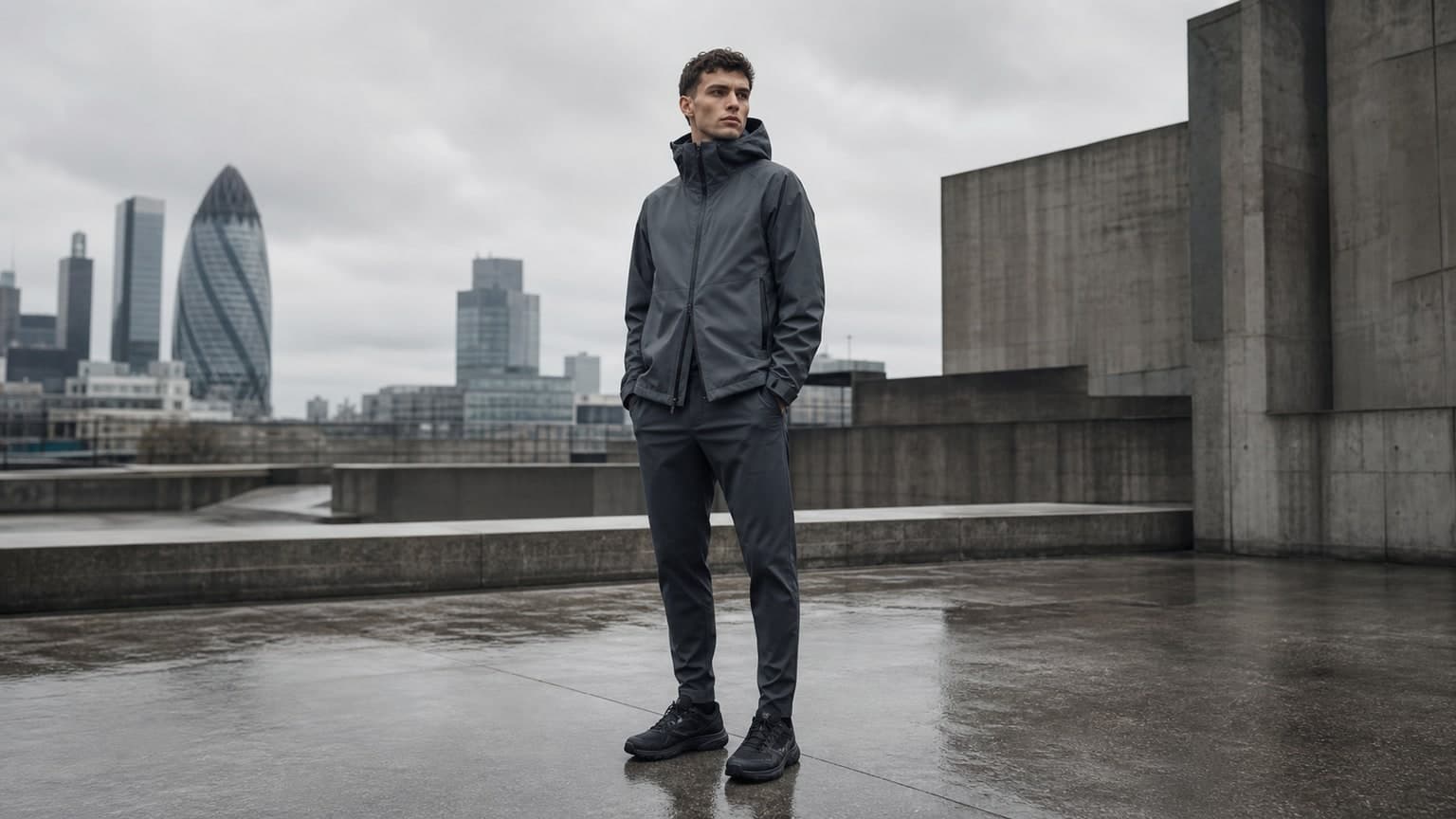
In 2026, gorpcore didn't die. It got a wardrobe upgrade and learned to whisper. The trend has matured into something the industry is calling "Quiet Outdoors," and the shift is exactly what it sounds like: muted tones replacing the bright accents, clean lines replacing the graphic chaos, high-quality technical trainers that read as easily in a boardroom as on a muddy trail. The function stayed. The volume dropped to a murmur.
When two trends become one
What's actually happening is a merger. Gorpcore and quiet luxury, which spent the early 2020s as opposite poles of the menswear conversation, have folded into each other.
The logic is almost obvious in hindsight. Quiet luxury was about understated quality, no logos, the flex of materials only an insider could clock. Gorpcore was about performance fabrics and engineered function. Combine them and you get the 2026 ideal: a garment with taped, waterproof seams and three hidden pockets, cut with the restraint of a $2,000 cashmere coat and finished in a palette of slate, bone, and moss. Brands like HAVEN have been fusing "seamless panels and Gore-Tex with the restraint of quiet luxury," and they're describing the entire moment.
The forecast is striking: by 2027, your average gorpcore wearer may be visually indistinguishable from your average quiet-luxury wearer, except their head-to-toe outfit is built from Gore-Tex and riddled with concealed storage. Same silhouette. Same muted color story. Wildly different engineering underneath.
Why now
This convergence isn't an accident of the trend cycle. It's a values shift wearing clothes.
The next phase of the aesthetic leans hard into smart materials and real sustainability: recycled and biodegradable fibers, plant-based coatings, temperature-regulating fabrics. The pitch has moved from "look outdoorsy" to "own fewer, better things that actually perform." Durability beating fast fashion. Waterproofing as a feature you'll use, not a costume you'll wear once. It's quiet luxury's obsession with quality crossed with gorpcore's obsession with capability, and the through-line is a generation that increasingly resents disposability.
There's also a status calculus at work. The loud-logo era of streetwear trained everyone to read brand marks as the flex. The reaction, the thing that now signals taste, is the absence of legible branding. If everyone can spot a logo, then no logo at all becomes the rarefied move. Quiet Outdoors lets you flex on materials, fit, and the knowing nod of another person who recognizes the shell you're wearing. It's an in-group handshake, not a billboard.
The streetwear lesson buried inside
Zoom out and Quiet Outdoors is really a referendum on what streetwear is for.
The genre spent fifteen years getting louder: bigger logos, bolder graphics, hype drops that were essentially advertisements you paid to wear. The 2026 mood is a deliberate course-correction toward sophistication and understatement. The energy isn't look at this brand I bought. It's look at how this is made. That's a meaningful reorientation, and it tracks with the broader cultural drift toward authenticity, function, and a quiet skepticism of anything too obviously trying to sell you something.
It doesn't mean the loud stuff is dead. Fashion never fully kills anything. But the prestige has migrated. The most coveted thing in this lane is no longer the piece that announces itself across a room. It's the piece that does its job perfectly, looks like nothing in particular, and reveals itself only to people who know what they're looking at.
How to actually wear it
If you want in without looking like you read a trend report, the rules are simple. Build around a palette of muted earth and grey tones. Choose one genuinely technical hero piece (a clean Gore-Tex shell, a pair of low-profile trail trainers) and let it anchor an otherwise restrained fit. Skip the high-vis. Skip the visible logos. Prioritize materials you can feel and seams you can trust.
The whole point of Quiet Outdoors is that it shouldn't look like a trend at all. Done right, it looks like you simply own good, useful clothes, which is, in 2026, the loudest statement you can quietly make.