The glossy feed problem
Open any feed in 2026 and the first thing you'll notice is how finished everything looks. Perfect gradients. Flawless skin. Seamless 3D renders. Type kerned to the pixel. The visual world has been buffed to a frictionless, machine-assisted shine, and a growing number of artists have decided they hate it.
So they're making things ugly on purpose.
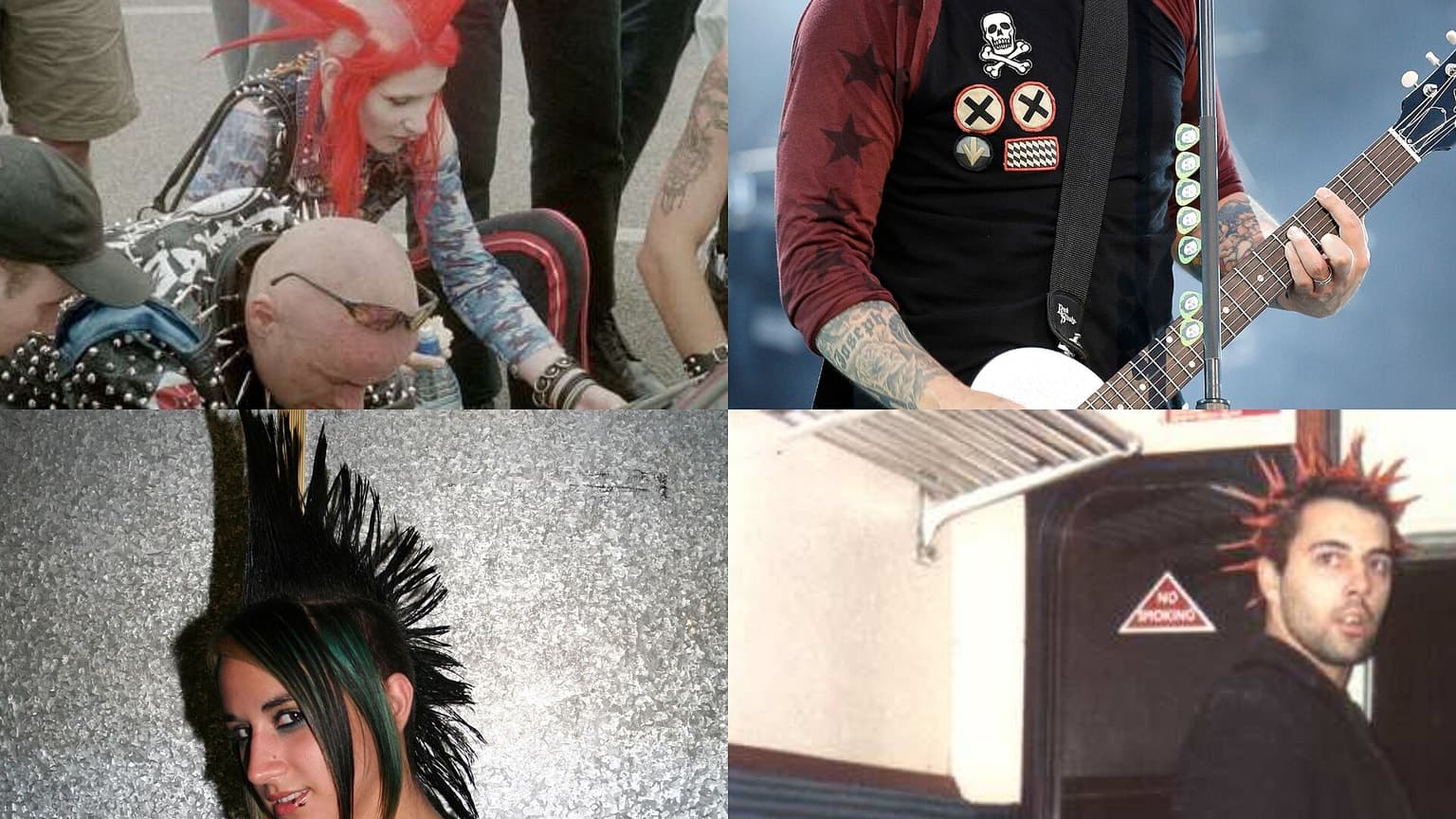
The biggest design story of the year isn't a new tool or a new platform. It's a backlash: a punk revival exploding across art and graphic design as a "visceral rejection of perfectionism and polished AI imagery." Designers are reaching, deliberately, for chaos, imperfection, and unfiltered expression: torn edges, clashing color, photocopier grain, handwritten type, the visible evidence of a human hand. After a decade sliding toward seamless digital gloss, the cutting edge of taste has decided that the seams are the whole point.
Imperfection as the new luxury
This is a status inversion worth understanding. For years, polish signaled effort, skill, and resources: clean meant good. AI quietly demolished that equation. When anyone can generate a flawless render in seconds, flawlessness stops being a flex and starts being a tell. Perfect now reads as cheap, automated, empty.
So the value migrates. The thing that's suddenly scarce, and therefore prized, is proof of human friction. The wobble in the line. The chaotic collage that obviously took hours of cutting and gluing. The imperfection an algorithm would have smoothed away. In 2026, mess is the new luxury, because mess is the one thing the machine can't fake without being told to fake it.
You can see it bleeding everywhere. Ransom-note typography. Zine aesthetics. Xerox-degraded imagery. The 3D-meets-2D collage style where artists smash rendered objects into hand-drawn illustration precisely because the mismatch feels alive. It's all the same instinct: a refusal to be smooth.
The DIY surge runs through everything
Crucially, this isn't just a design-school affectation. It's plugged straight into a much broader cultural current.
2026 has been widely called the year of subculture revival and loud individuality, a hard pivot away from the quiet minimalism and normcore of the preceding years. People are "cutting, sewing, and customizing again." Vintage isn't merely sustainable anymore; it's subversive. Thrift stores have become cultural goldmines, and reworking clothes (distressing denim, painting sneakers, hacking a thrifted dress into something new) has become an act of creative self-definition.
The punk design revival is the visual-art expression of that exact impulse. As one writer put it, DIY "isn't just about saving money; it's about reclaiming control," crafting your own look as "the ultimate rebellion in a world where fast fashion cycles dictate taste." Swap "fast fashion cycles" for "AI generators" and you've got the design world's version of the same fight. Both are reactions against a system that produces infinite, frictionless, taste-flattening sameness. Both answer it with scissors and glue.
AI as accomplice, not enemy
Here's the nuance that keeps this from being a simple Luddite story: the same artists rejecting AI gloss are, plenty of them, using AI anyway, just differently.
The more sophisticated read of the moment treats AI not as a replacement for the artist but as "an extension of the imagination," a tool for exploration and composition that a human then mangles, recontextualizes, and roughs up by hand. The rebellion isn't against the technology. It's against the aesthetic the technology defaults to: the soulless, over-optimized, instantly recognizable AI look. Run the output through a photocopier, tear it, collage it, scrawl over it, and you've turned the machine's polish into raw material for something defiantly human.
That's the real sophistication of the 2026 punk revival. It's not anti-tech nostalgia. It's a generation that grew up native to these tools, knows exactly what the frictionless default looks like, and has consciously decided to make work that looks like it could not have come from a prompt alone.
Why it matters beyond the moodboard
Step back and the punk revival is doing the same cultural work punk always did: drawing a line between the authentic and the manufactured, and insisting the authentic is worth more.
This wave runs alongside other 2026 art-world currents: a documented hunger for immersive, multi-sensory experiences, a Gen Z appetite for small-scale and emotionally uplifting work, a deepening commitment to sustainable materials. Different surfaces, same core question: in a world drowning in cheap, perfect, infinitely reproducible images, what still feels real?
The answer the punk revivalists keep arriving at is the same one their forebears reached in 1977. Real is the thing with fingerprints on it. Real is the mistake left in on purpose. Real is, in 2026, whatever the algorithm would have cleaned up, which is exactly why a generation is fighting to leave it ugly.