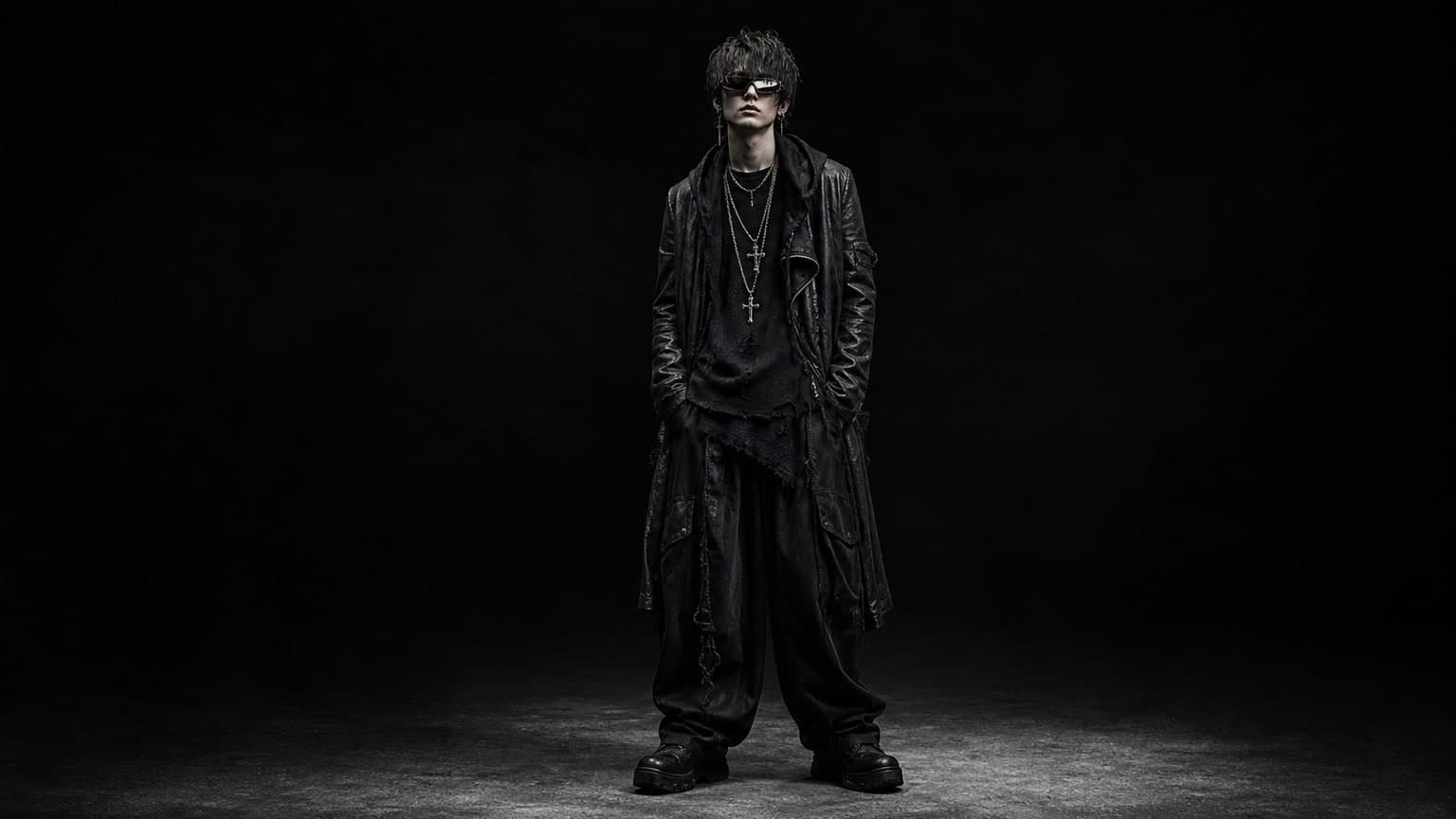
If you've spent any time on streetwear TikTok over the last two years, you've seen it: the all-black silhouettes, the deliberately distressed layers, the draping that looks part runway and part dungeon, the silver crosses and the alien sunglasses. That's Opium, and depending on who you ask, it's either the most exciting thing to happen to youth fashion since Virgil or a costume that everyone will be embarrassed by in 2028. The truth, as usual, is somewhere in the middle. Here's the full picture.
Where It Came From
Opium started as a music label. Playboi Carti founded it in 2019 as a home for his own increasingly experimental rap and for a roster of artists (Destroy Lonely, Ken Carson among them) who shared his appetite for the abrasive and the strange. But Carti has never treated music as a standalone product. His whole project is sensory: the distorted vocals, the screaming production, the deliberately blown-out album art, and crucially, the look. Opium quickly stopped being just a label and became an entire lifestyle aesthetic that fused fashion, art and sound into one mood.
That mood is dark in every sense. Visually, Opium draws from avant-garde, punk and gothic traditions. The palette is overwhelmingly monochromatic: black on black on black, with the occasional flash of blood red or bone white. The garments lean on draping, layering, waxed and distressed leather, and a general sense that the clothing has been through something. Then come the signatures: silver jewelry, especially cross-shaped pieces, and futuristic eyewear, both worn constantly by Carti himself and instantly adopted by the fanbase.
Why It Resonated
To understand why Opium caught fire with Gen Z, you have to understand what it's reacting against. The dominant streetwear of the late 2010s was clean, branded and aspirational: logo hoodies, hype sneakers, a generally optimistic relationship with consumption. Opium is the photo negative of all that. It's deliberately ugly-beautiful, anti-aspirational, more interested in mood than in flexing a logo. For a generation raised on a feed of relentlessly polished product, the appeal of something murky, uncomfortable and a little frightening is obvious.
It also rewards participation. Opium isn't a brand you buy; it's a code you assemble. The look is built from thrifted leathers, distressed knits, the right silver chain, the right sunglasses, sourced and styled rather than purchased in a single transaction. That makes it feel earned, almost subcultural, in a way that copping a Supreme box logo never could. You can't buy your way into looking Opium. You have to understand it.
The Commercial Turn
Of course, anything this resonant gets monetized, and Opium's pull has begun translating into hard fashion deals. Carti's orbit has produced a string of notable collaborations: the label linked with iconic outerwear name Pelle Pelle, reviving a brand deep in hip-hop's fashion memory through Carti's experimental lens. There was the "No Fear" revival, the dad-skate brand that Carti and the Opium crew dragged back into relevance before that chapter wound down in 2025. And most significantly, Carti signed a multi-year partnership with Under Armour to develop a gothic performance-wear line slated to launch late in 2026, a genuinely fascinating collision of his dark aesthetic with one of America's biggest athletic brands.
That Under Armour deal is the one to watch. Pelle Pelle and No Fear are heritage brands being reanimated; Under Armour is a mainstream giant betting that Opium's mood can move actual performance product. If it works, it's proof that the aesthetic has fully escaped the underground and entered the mall. If it flops, it'll be a case study in how an authentic subculture loses its edge the moment it gets a corporate sponsor.
The Criticism
Opium isn't without its detractors, and the critiques are fair. The look can tip easily into costume: there's a fine line between a genuinely considered dark-avant-garde fit and a teenager who bought a leather jacket and some cross necklaces last week. Because the aesthetic is so visually codified, it also breeds conformity: a movement built on individualism that, in practice, produces a lot of identical-looking outfits. And there's the perennial question of longevity. Aesthetics this intense tend to burn bright and fast. The graphic-heavy hype era felt permanent right up until it didn't.
Where It Goes Next
Here's the honest read for mid-2026: Opium has passed the point where it can be dismissed as a phase, but it's also entered the dangerous commercial stretch where authenticity gets tested. The Under Armour line will be the referendum. If Carti can translate the murk into product that doesn't feel like a cynical cash-in, Opium cements itself as a durable fashion language rather than a moment. If not, it'll join the long list of music-born aesthetics that defined a couple of years and then became a punchline.
Either way, its influence is already baked in. The broader move toward darker, moodier, more avant-garde streetwear (away from clean logos and toward layered, textural, deliberately imperfect dressing) owes a real debt to what Carti built. You don't have to wear the crosses to have been shaped by Opium. By 2026, most of streetwear already has been.