Thirty-four days before prison, Elizabeth Holmes invites a film crew into her life. That is the starting point of You Can See Everything, the A24 documentary directed by Nathan Fielder and Lance Oppenheim. The invitation is what makes the premise so arresting. A person already defined by a public story is giving another set of storytellers access.
A24’s official synopsis says the project grows from that intimate access into a three-year journey. The distributor has released promotional material, but its film page still lists the release as 2026 with the date to be determined. There is no confirmed opening day to put in your calendar yet.
Access is the hook
The title makes a huge promise. Seeing everything would mean getting past the performance, past the editing and past the version of events somebody wants you to accept. A documentary can offer extraordinary access without ever reaching that impossible position.
That tension is our reason to pay attention. The most interesting question in this premise is what Holmes expects the camera to do for her, and what the filmmakers decide to do with the invitation. Those interests might align in one moment and pull apart in the next. We have not seen the film, so that is a question to bring to it, rather than a conclusion about what happens.
The image puts a person in front of the reputation
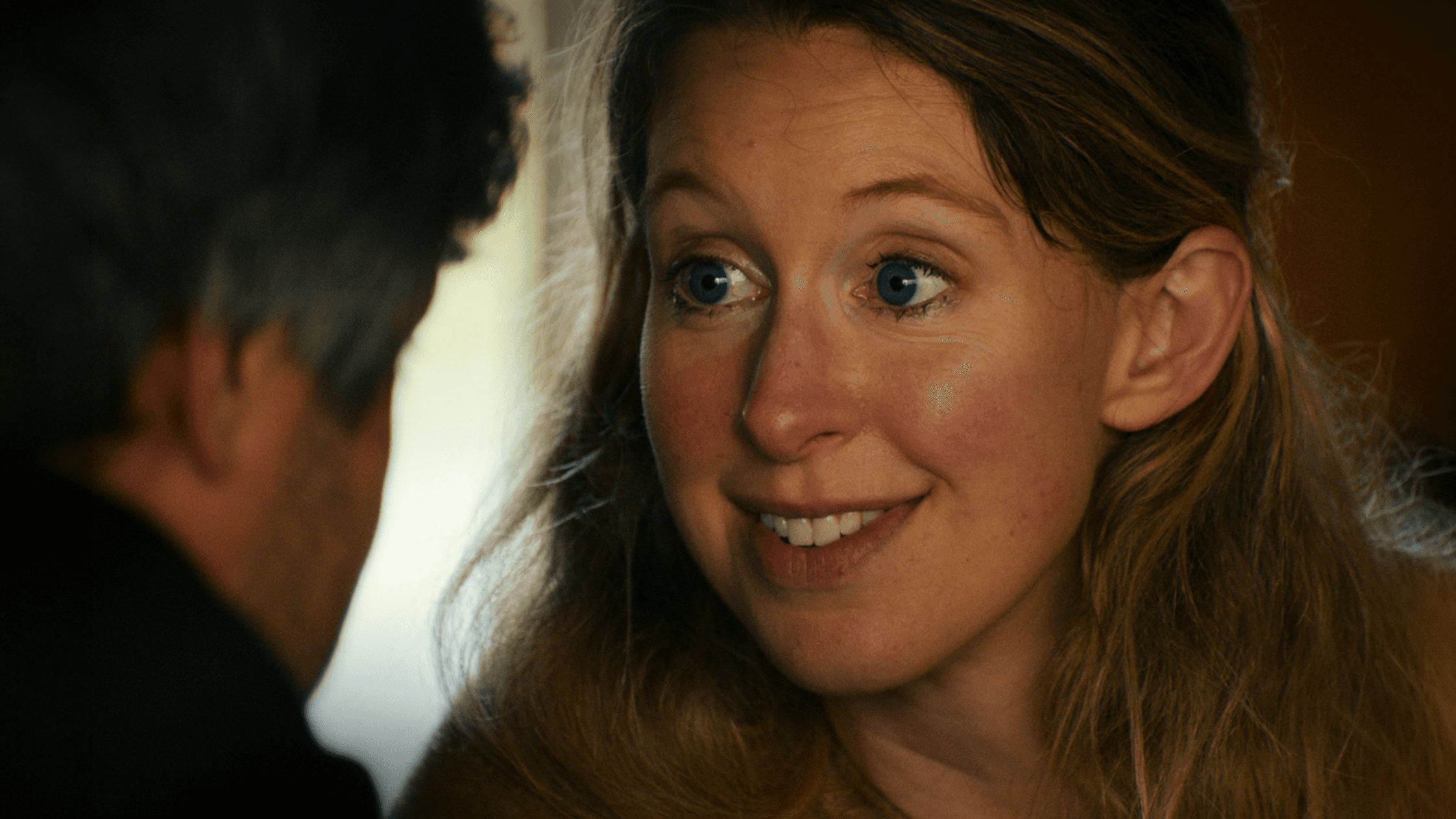
A24’s promotional still is a close-up of Holmes mid-conversation. A blurred figure occupies the foreground; the frame brings us close to an exchange without explaining it. It is a strong choice for a film whose opening premise depends on being allowed into the room.
Close framing also creates a challenge for viewers. A face can hold your attention before the film has established what you should make of the conversation. Sympathy, suspicion and curiosity are responses an image can provoke; none of them is a substitute for evidence.
A preview, with the important questions still open
The directors’ names and the subject make this an easy title to flag. What will matter in the finished documentary is how it handles the gap between access and understanding. Does it show the terms of the encounter? Does it let viewers recognize the choices behind what they are seeing?
That is a more useful way into the film than deciding in advance whether it will vindicate or expose anyone. The premise already offers enough to be curious about: a subject who opens the door, filmmakers who walk through it, and an audience that will have to work out what the invitation reveals.
Promotional image: A24. This preview is based on the distributor’s published material.