Formula 1 isn't a sport anymore: it's a cultural phenomenon
Somewhere between the streaming docuseries boom and the grid filling with young, fashion-literate stars, Formula 1 stopped being a niche motorsport and became one of the most powerful cultural platforms on earth. The clearest proof: in 2025, LVMH became a Global Partner of F1 under a historic 10-year agreement involving Louis Vuitton, Moët Hennessy and TAG Heuer.
That's not a sponsorship. That's the world's largest luxury conglomerate making a decade-long bet that F1 is where culture, money and aspiration now converge. As F1 itself put it, the partnership exists because the sport has emerged as "a true cultural phenomenon." When LVMH commits 10 years, the rest of the fashion world treats it as gospel.
The paddock became a runway
The transformation is most visible in the paddock, the backstage area that's morphed into the most-photographed fashion environment in sports outside the NBA tunnel. Drivers now arrive at race weekends in carefully styled fits that get covered like Fashion Week looks, and the most influential of them all is Lewis Hamilton.
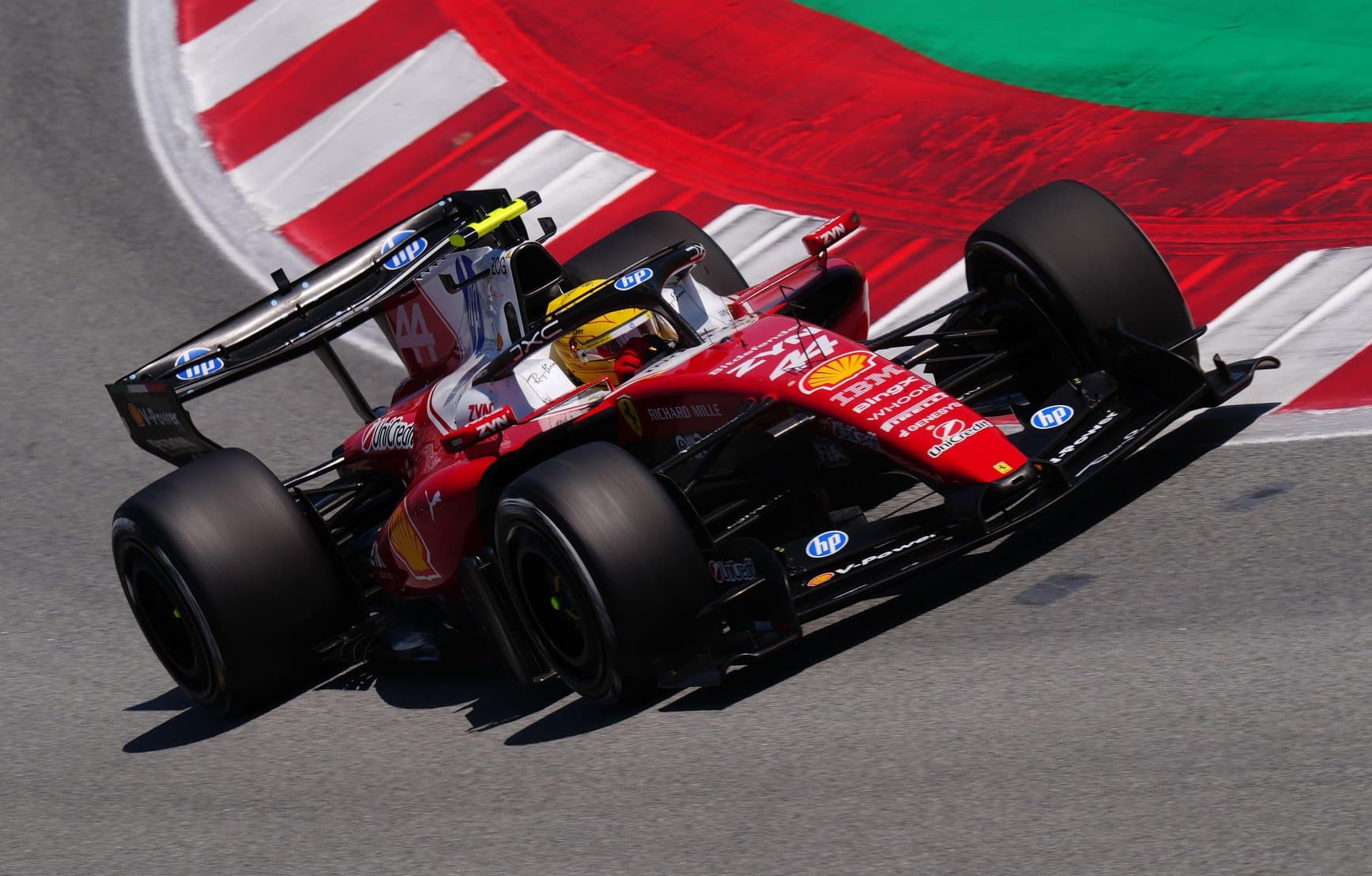
When Hamilton made his Ferrari debut, his first Instagram post in the famous red (paired with a Louis Vuitton jacket) became the most-liked F1 post ever, pulling 10 million-plus likes and 100,000 comments in 48 hours. Sit with that. A driver's outfit choice generated more engagement than most race results. Hamilton has spent years bridging motorsport and high fashion, sitting front row at shows and turning every paddock entrance into a styling exercise. He didn't just open the door between F1 and fashion. He kicked it down.
The grid behind him is stacked with style-conscious stars. Charles Leclerc beside Hamilton at Ferrari, George Russell and rising teenager Kimi Antonelli at Mercedes, and a whole generation of drivers who understand that in 2026, your fit is part of your brand equity.
Merch became a luxury flex
The most fascinating shift is happening at street level. F1 team merchandise, once a souvenir-stand afterthought, has become a genuine luxury asset. Industry observers describe a "paddock to pavement" pipeline that's turned race-weekend gear into desirable streetwear traded well beyond the track.
The collaborations tell the story. Mercedes has worked with Tommy Hilfiger; the team formerly known as Alfa Romeo (now Stake F1 Team Kick Sauber) linked with streetwear heavyweight Palace. These aren't novelty crossovers. They're the team-merch equivalent of a sneaker collab, with limited drops and resale demand to match. Data showed a 35% surge in earned media value for fashion brands associated with F1 in a single year. The cap with the right team logo became this decade's quiet flex.
Why young culture is all-in
The demographics explain everything. F1's audience has skewed dramatically younger and more female, and the engagement is staggering: reports cite that a majority of fans now engage with F1 content daily, and the overwhelming majority expect to still be fans five years out. Those are the loyalty numbers brands dream about.
This is a fanbase that found the sport through narrative (the rivalries, the personalities, the behind-the-scenes drama) rather than lap times. They came for the characters and stayed for the world. And a fashion-driven world is exactly the kind a culturally fluent audience wants to live inside. K-pop acts are now moving F1 merch. The sport has become a lifestyle that happens to involve cars.
The 2026 wildcard: everything is new
The timing of fashion's F1 obsession collides with the sport's biggest competitive reset in years. The 2026 season introduced a sweeping new regulation package: revised hybrid power units with a 50-50 combustion-electric split, plus new active aerodynamics. Audi entered as a works team after acquiring Sauber, Cadillac debuted as an 11th team using Ferrari power, Honda partnered exclusively with Aston Martin, and Ford returned to back Red Bull.
The on-track product is genuinely unpredictable: Mercedes opened the season with a Russell-Antonelli one-two in Australia, signaling the old order is up for grabs. Unpredictability is rocket fuel for cultural attention. New storylines mean new heroes, new villains, and new reasons for casual fans to lock in. A sport in flux is a sport in headlines.
What it means for the culture
F1's fashion takeover is the purest example of a broader truth: the line between sport and culture has dissolved. The most valuable thing a league can own isn't a trophy. It's relevance. F1 figured out that selling a lifestyle is more durable than selling lap times, and the luxury world rewarded it with the biggest partnership in the sport's history.
For a hype-driven audience, the appeal is obvious. F1 offers speed, money, glamour, global travel, designer collaborations and a roster of genuinely magnetic characters, all wrapped in a narrative machine that never stops running. It's a sport you can wear, follow, and stylize.
The paddock-to-pavement pipeline is open, the merch is moving, and LVMH is in for a decade. Formula 1 isn't just fashion's fastest lane. Right now, it might be the whole highway.