The most important thing happening in crypto right now will not trend on your feed. There is no rocket emoji for it. It is, by every internet-culture metric, deeply boring.
It is also the thing that finally makes crypto matter.
The quiet number that beat the loud ones
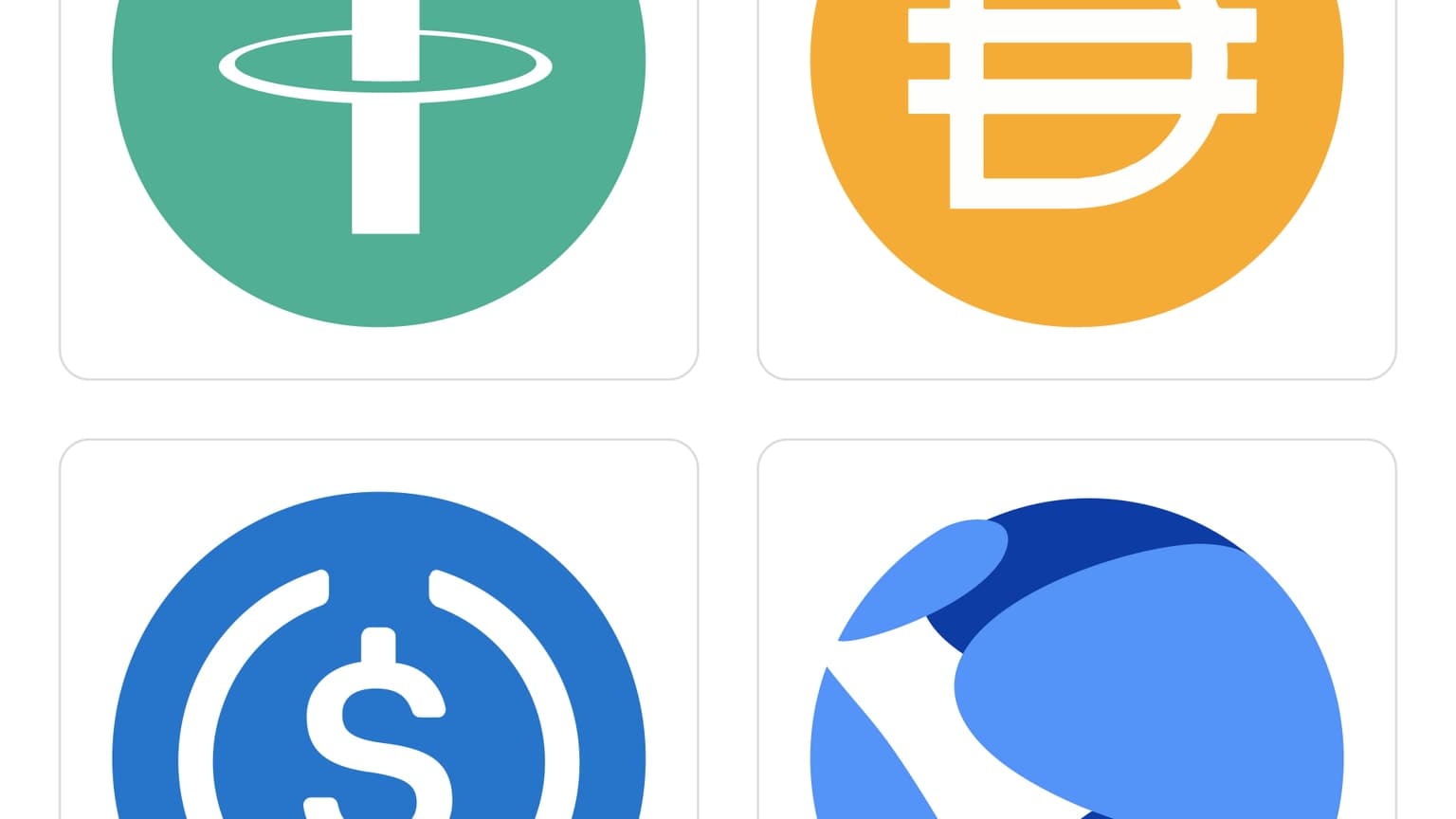
While everyone argued about whether Bitcoin would hit $150,000 or $200,000, the stablecoin market crossed $200 billion in mid-2025 and kept climbing past roughly $319 billion by March 2026. Stablecoins (digital tokens pegged one-to-one to the US dollar) are now the single most-used product in all of crypto. Not speculation. Not jpegs. Dollars that move at internet speed.
Analysts at a16z crypto have started calling stablecoins "the internet's dollar," and the framing is right. The whole point of crypto was supposed to be reinventing money. For years that was a meme. In 2026 it's a settlement layer that companies actually use for cross-border payments, treasury operations, and remittances. Some forecasts put total stablecoin supply rising more than 50% year-over-year toward roughly $420 billion by the end of 2026.
That is what an inflection point looks like. Not a candle on a chart: a behavior change.
Tokenization: the asset version of the same idea
If stablecoins are dollars on a blockchain, "real-world asset tokenization" (RWA) is everything else on a blockchain. Treasury bills, money-market funds, private credit, even slices of real estate, wrapped into tokens that can settle instantly, trade around the clock, and be programmed.
The numbers are still small relative to global finance but growing fast: tokenized real-world assets sat around $18 billion in late 2025, and firms like Cantor Fitzgerald project that figure could exceed $50 billion in 2026 as more institutions test on-chain settlement. BlackRock's tokenized treasury fund (BUIDL) has become a flagship example, the same BlackRock that once treated Bitcoin like radioactive waste.
Here is the cultural tell: tokenization in 2026 is being described as "less speculative, more structural." Translation: the casino energy that defined the last two cycles is being replaced by plumbing. Boring plumbing that big money trusts.
Why the vibe shifted
Three things changed at roughly the same time.
First, regulation. The GENIUS Act, signed into law in July 2025, created the first federal framework for dollar-backed stablecoins in the US, requiring issuers to hold full reserves and publish monthly disclosures. Suddenly stablecoins weren't a gray-area gamble; they were regulated financial infrastructure. The broader CLARITY Act, which passed the House in mid-2025, started sorting tokens into clear buckets: commodities for the CFTC, securities for the SEC, stablecoins in their own lane.
Second, ETFs normalized crypto for normal people. Spot Bitcoin and Ethereum funds now hold hundreds of billions in combined assets, and Vanguard, a longtime holdout, opened crypto ETF trading to its enormous customer base. When your parents' retirement brokerage offers it, the "fringe" label stops sticking.
Third, the speculation got exhausting. After the memecoin frenzy of early 2025 (more on that another day), a chunk of the market rotated toward things that produce yield, have audited reserves, and don't evaporate overnight.
Why a culture publication should care
You might reasonably ask why a site about hype, fashion, and internet culture is writing about money plumbing.
Because plumbing is where culture eventually lives. Email was boring infrastructure before it reshaped how we talk. App stores were boring before they birthed entire creative economies. The reason streetwear drops, ticketed events, and creator payouts feel clunky online is partly a payments problem, and stablecoins are quietly solving it. "Agentic payments," where software agents transact on your behalf, are already being floated as a 2026 use case. That's the kind of background tech that ends up powering things you actually touch.
The collectibles, the memecoins, the brand NFTs: those are crypto's loud surface culture. Stablecoins and tokenization are the substrate underneath. When the substrate gets reliable, the surface culture gets more interesting, not less.
The risk caveat (because we're not here to shill)
None of this is a guarantee, and none of it is financial advice. A few honest flags:
- "Backed by dollars" depends on who's checking. Regulation reduces but doesn't eliminate the risk that a stablecoin breaks its peg or that reserves aren't what's claimed. The new rules are young and largely untested in a real crisis.
- Tokenization adds plumbing risk. Custody, settlement, and smart-contract bugs are real failure points. "On-chain" doesn't mean "can't go wrong."
- Boring can still blow up. The 2022 collapse of an "algorithmic stablecoin" wiped out tens of billions and reminded everyone that the word "stable" is a marketing claim until proven otherwise.
- Yield is not free. Anything paying you to hold it is taking a risk somewhere. Know what it is.
The takeaway
The next phase of crypto won't be defined by a token that 100x's overnight. It'll be defined by dollars and assets moving on rails that feel, eventually, invisible, the way you don't think about the protocol behind a text message.
That's not a sexy story. But the boring eras are usually the ones that decide whether a technology becomes culture or just stays content. Right now, crypto is making its bid for the former.
Keep an eye on the plumbing. It's where the next decade gets built.